Key takeaways
- Take the dead flowers off at once, then let the green stalk stand until it yellows before cutting it 1 to 2 inches above the bulb. Iowa State University Extension gives that measurement, and the Toronto Master Gardeners say wait for the yellow.
- The GTA is not one date. Average last spring frost runs from Apr 11 downtown to May 03 at Buttonville in Markham, a spread of 22 days, but the downtown frost record ends in 2011 while Buttonville's runs to 2020.
- The dark rest plus the regrowth runs 12 to 18 weeks across the sources. Take 8 and 8, which is 16 weeks, and flowers on Christmas Day mean the pot goes dark about September 4, inside a window running August 21 to October 2.
- Of the 40 packaged bulbs in Wildwood Outdoor Living's amaryllis collection, 11 sell more than one bulb grade. Four of those run to three grades and price them alike at $21.99, $26.99 and $39.99, smallest to largest, so the top grade costs $39.99 - $21.99 = $18.00 more.
- The rest is optional. The University of Wisconsin-Madison Extension states that commercial bulbs do not require a resting period, and Iowa State's second route keeps the plant green at 50 to 55°F from fall to mid-winter.
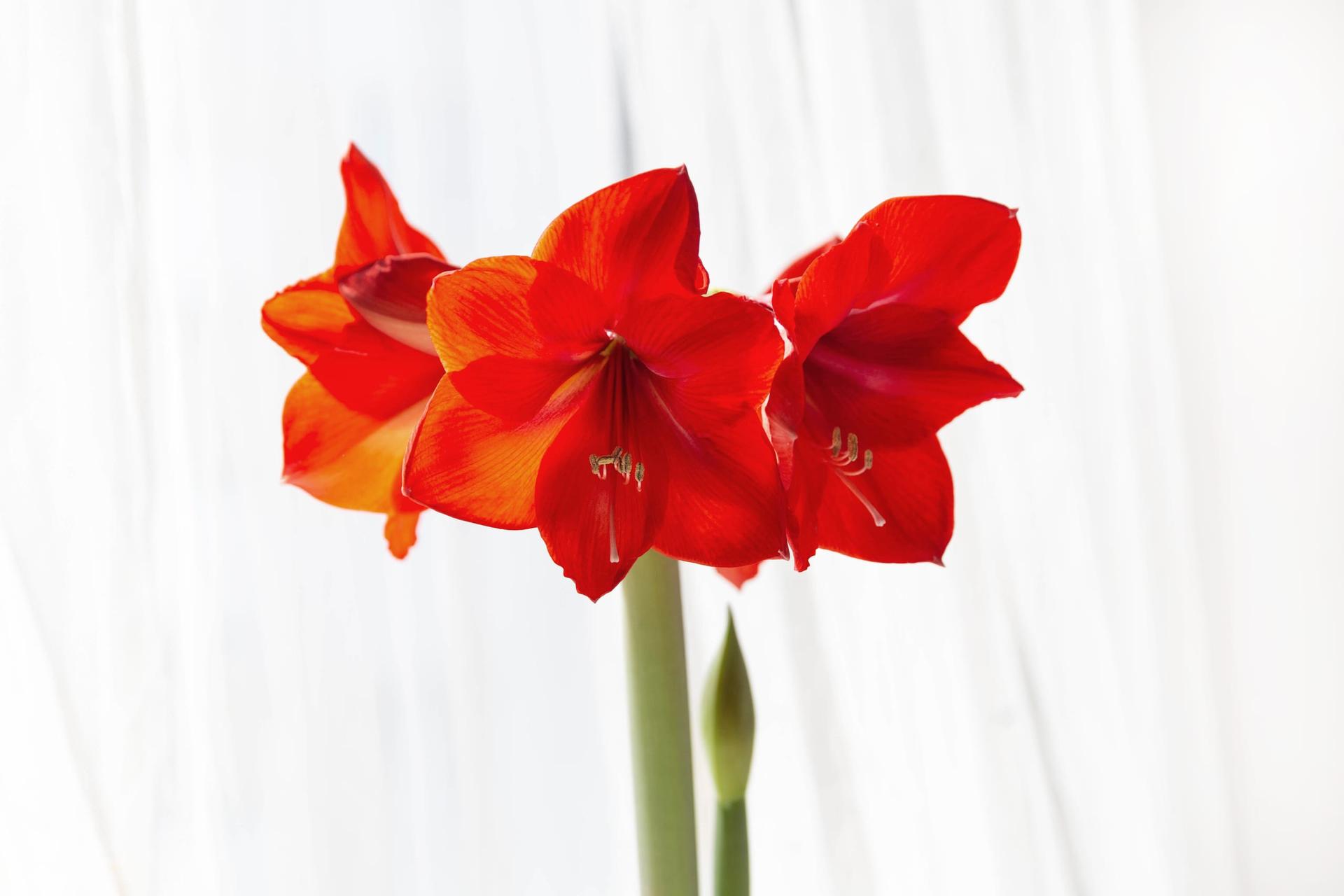
Your amaryllis has finished. Take the dead flowers off, leave every leaf on, and move it to the brightest window you have. That is the whole job for months. The leaves are a food factory, and a bulb that eats well all summer flowers again next winter. Two dates decide the rest, and both are local: outside after the last spring frost, indoors before the first fall frost. Each varies by about three weeks across the GTA.
Cut the stalk, keep every leaf
The stalk is spent and the leaves are not. That is the thing people get wrong.
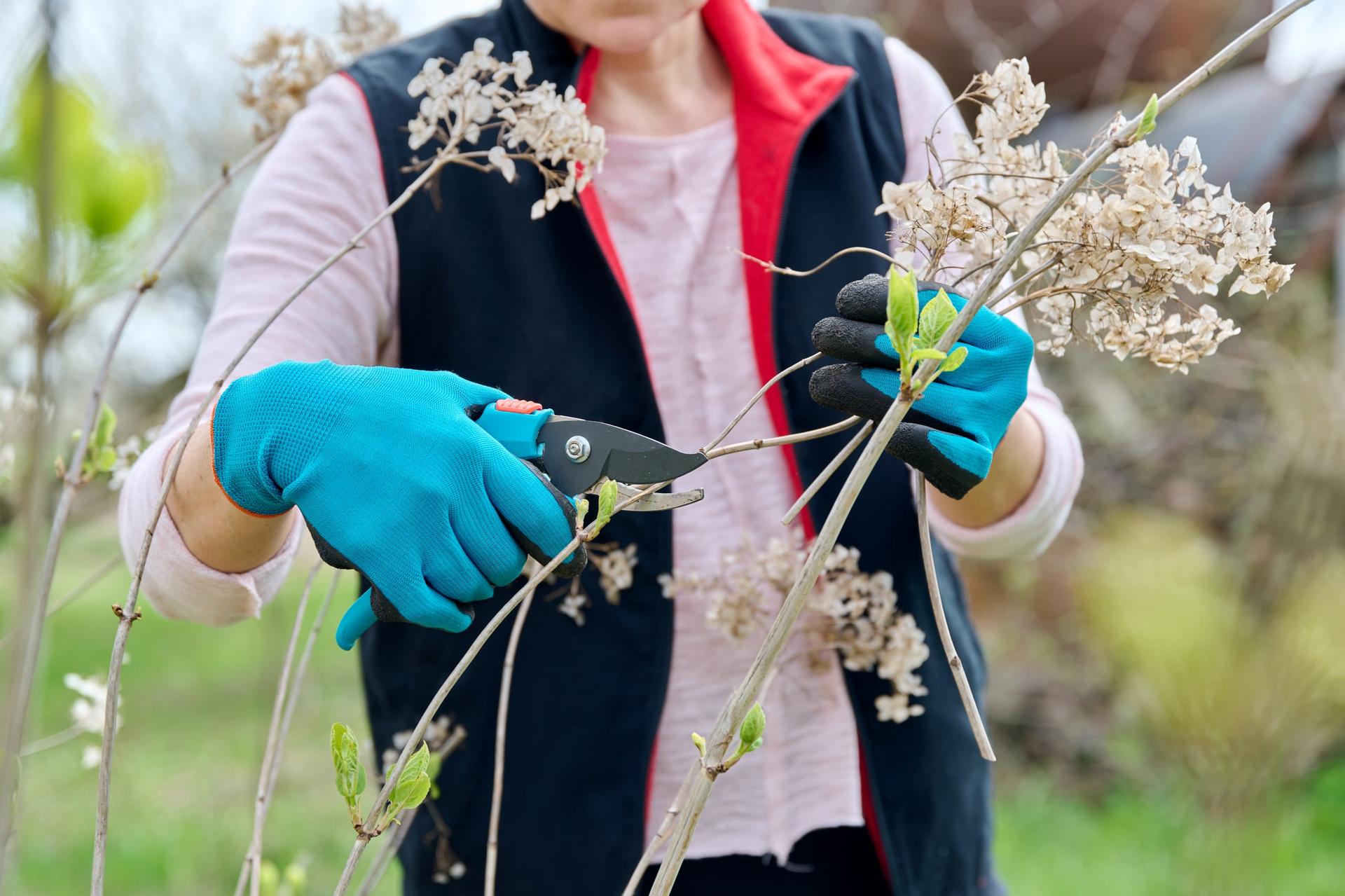
Iowa State University Extension gives the measurement: "After the flowers fade, cut off the flower stalk with a sharp knife or pruners. Make the cut 1 to 2 inches above the bulb. Don't damage the foliage." That is about 3 to 5 cm above the neck of the bulb, and those two inches are what keep the knife out of it.
Sources disagree on timing. Iowa State cuts as soon as the flowers fade. The University of Wisconsin-Madison Division of Extension waits for the whole stalk to yellow or brown, then cuts "a few inches above the neck of the bulb". The Toronto Master Gardeners, answering this in February 2026, agree: "Allow the flowering stems to turn yellow before trimming, while the leaves continue to grow."
Both agree on why you cut at all. The Chicago Botanic Garden puts it plainly: "As the flowers fade, remove the flower and stalk so the amaryllis does not use energy producing seeds." A fertilised flower makes a seed pod, and the bulb pays for it.
So take the dead flowers off straight away, let the green stalk stand until it yellows, and never cut a leaf.
The leaves are next winter's flowers
From here it is all about feeding the bulb. The Chicago Botanic Garden: "The foliage is producing energy that will be stored in the bulb and used to fuel the next bloom cycle." That energy is stored as size, and bigger bulbs make more flowers. Wisconsin: "Select the largest bulbs available as the larger the bulb, the more flowers it will produce." Sheridan Nurseries ties it to your windowsill: "The more leaves produced means more flower stalks next winter." Bulbs are graded and sold by circumference in centimetres.
Water and feed from the day it finishes
Wisconsin is the most specific: "fertilize monthly with a complete fertilizer (5-10-10 or 10-10-10) applied at the rate directed for houseplants". A complete fertiliser carries all three main nutrients, and those numbers are the ratio on the box. The page's warning matters more than the ratio: more than that, or a stronger feed, "can cause salts to build up and burn the roots".
Iowa State waters "when the soil surface is nearly dry" and feeds "every 2 to 4 weeks". Pick one schedule and stay with it. Amaryllis roots rot in wet soil.
When it can go outside, on GTA dates
Our eight sources do not agree on how to time this. Three go by frost: Wisconsin's "Once the danger of frost is past", the Chicago Botanic Garden's "once all danger of frost has passed", and Gardening at USask's "Once there is no danger of frost in spring". Two name a date, both late May: Iowa State and Sheridan Nurseries. Landscape Ontario goes by temperature, "once the spring weather gets above freezing", and the Toronto Master Gardeners by season, "during the summer". One says nothing.
Only the frost test is a number you can look up. Here it is across the region, from Environment and Climate Change Canada's 1991-2020 Canadian Climate Normals for Toronto (City), Toronto Pearson, Oshawa and Toronto Buttonville. They are the only GTA stations that publish one, and they do not agree.
| Station and climate ID | Average last spring frost | Average first fall frost | Frost-free period | Record length code | Frost record end year |
|---|---|---|---|---|---|
| Toronto (City), 6158355 | Apr 11 | Nov 06 | 208 days | D, at least 15 years | 2011 |
| Toronto Pearson, Mississauga, 6158733 | Apr 27 | Oct 20 | 174 days | C, at least 20 years | 2020 |
| Oshawa, 6155875 | Apr 30 | Oct 15 | 167 days | D, at least 15 years | 2006 |
| Toronto Buttonville, Markham, 6158409 | May 03 | Oct 13 | 161 days | C, at least 20 years | 2020 |
May 03 minus Apr 11 is 22 days, and the growing seasons differ by 208 - 161 = 47 days. Read the last two columns before leaning on either number. The letters are the agency's own grades for the record behind each figure, and its legend defines C as "At least 20 years" and D as "At least 15 years". The right-hand column matters more. Each station's frost figures come from its own daily-minimum record. Those records stop in different years: downtown's in 2011, Oshawa's in 2006, Pearson's and Buttonville's in 2020. So the 22-day and 47-day gaps set records of different lengths and different decades against each other. Downtown is genuinely the mildest of the four, but part of the margin is the record.
An average is not a deadline either. Each station publishes a second table of odds. At Pearson the last spring frost lands on or after May 04 in half of years. It lands on or after May 13 in a quarter of them, and on or after May 19 in one year in ten. Buttonville runs the same way, at May 05, May 11 and May 18. So Apr 27 is the wrong date to act on, and the two sources that name a date both land on the safer side: "Pots can be moved outside in late May."
Then harden it off, letting it get used to real sun in stages. Iowa State starts it "in a shady, protected area", then "After 2 or 3 days, gradually expose the amaryllis to longer periods of direct sun. The amaryllis should be properly hardened in 7 to 10 days." Sheridan gives the reason for starting in shade: "so the foliage does not burn". Wisconsin then asks for "full sun for at least 6 hours daily" and Sheridan for "at least 4 hours of sunshine per day". Four is the floor and six is better.
One more disagreement can cost you the plant. Wisconsin says to sink the whole pot rather than the bulb: "Because the roots are brittle, planting directly in the ground and digging up later is not recommended." Sheridan allows the bulb in the ground if you are careful, warning that "the fleshy roots resent rough handling". Sinking the pot gets the same result with nothing to break.
Bringing it in, and the dark rest
Iowa State names a date: "Bring the plant indoors in mid-September." Wisconsin says "before any danger of frost".
The table above shows why mid-September is a margin rather than a fuss. Buttonville's average first fall frost is Oct 13 and Oshawa's is Oct 15, but the odds run earlier. A first fall frost on or before Sep 22 happens in one year in ten at Pearson, and on or before Sep 26 at Buttonville. That is barely a week after the date Iowa State gives. Sheridan expects the plant to be winding down anyway: "Leaves will begin to turn yellow and die back by late August."
Bring the pot in and stop watering and feeding. Sheridan adds a detail nobody else does: while it is still outside, "Lay the pot on its side so rain won't moisten the soil." Let the leaves dry and shrivel before cutting them off.
How long and how cool, by source:
- Iowa State: "at least 8 to 10 weeks" in "a 50 to 55°F location", roughly 10 to 13 °C.
- Wisconsin: a cool, dark place such as a basement or closet, "45 to 55ºF is ideal".
- Sheridan Nurseries: "a dark, cool basement (about 13°C) for approximately 2 months".
- Landscape Ontario "about 10 weeks", Gardening at USask "for at least 8 weeks", and Botanus, a Canadian supplier that has since retired, "8-10 weeks".
- Chicago Botanic Garden: "two to four months".
An unheated basement corner or cold room does it. Gardening at USask offers a small-space alternative, the crisper drawer of the fridge, with one warning: "Do not store it with apples". They give off ethylene gas, which the page says "will prevent your bulb from blooming".
Counting back to the date you want flowers
Sheridan Nurseries gives the rule: "6-8 weeks before you want your Amaryllis to flower again, bring it out of its resting place." Wisconsin counts from the other side, saying it "typically takes 4 to 6 weeks for the bulbs to bloom after coming out of dormancy".
The regrowth leg runs 4 to 8 weeks across the sources, and the rest before it runs 8 to 10 weeks. End to end that is 12 weeks at the fast extreme and 18 at the slow one. Take 8 and 8, and count back in days.
Flowers on Christmas Day. December 25 minus 56 days is October 30, so that is the day the pot comes out into the light. October 30 minus another 56 days is September 4, so that is the day it goes dark.
How wrong can that be? On the fast pair, 4 weeks growing and 8 resting: December 25 minus 28 days is November 27, and November 27 minus 56 days is October 2. On the slow pair, 8 growing and 10 resting: December 25 minus 56 days is October 30, and October 30 minus 70 days is August 21. So the day it goes dark sits between August 21 and October 2. Eight and eight puts it at September 4. The midpoint of that 42-day window is 21 days along, September 11.
Flowers for Valentine's Day. On 8 and 8, February 14 minus 56 days is December 20, the day it comes out. December 20 minus 56 days is October 25, the day it goes dark.
| When | What to do | Source |
|---|---|---|
| The week it finishes | Take the dead flowers off; leave the green stalk until it yellows, then cut 1 to 2 inches above the bulb | Iowa State Extension; Gardening at USask |
| That month onward | Brightest window; water when the surface is nearly dry; feed every 2 to 4 weeks | Iowa State Extension |
| Through spring | Feed monthly with a complete 5-10-10 or 10-10-10 at the houseplant rate | UW-Madison Extension |
| Late May | Move the pot outside; harden it off over 7 to 10 days, starting in shade | Sheridan Nurseries; Iowa State Extension |
| June to August | Sink the pot in a bed; at least 4 hours of sun, and 6 is better; keep watering and feeding | Sheridan Nurseries; UW-Madison Extension |
| Late August | Leaves begin to yellow and die back; ease off the water | Sheridan Nurseries |
| Late August to mid-September | If it summered in the ground, lift the bulb and dry it off | Sheridan Nurseries |
| Mid-September | Bring the pot indoors, before the first hard frost | Iowa State Extension; Sheridan Nurseries |
| Late September | Move it to a cool, semi-dark place and stop watering | Iowa State Extension |
| At least 8 to 10 weeks, or about 2 months | Dark and cool, about 13 °C, no water at all | Iowa State Extension; Sheridan Nurseries |
| 6 to 8 weeks before your date | Bring it into the light, refresh the top of the soil, water it well | Sheridan Nurseries |
You do not have to rest it at all
Almost every page presents the dark rest as compulsory. It is not, which matters if you have nowhere cool and dark.
Wisconsin is explicit: "Commercial amaryllis bulbs do not require a resting period and will bloom if kept evergreen. However, blooming time can be controlled by allowing the bulb to go through 8 to 10 weeks of dormancy to initiate flower buds." The rest is a timing tool, not life support. Iowa State gives the same alternative: "place the plant in a well-lit, 50 to 55°F location in fall. Maintain the amaryllis as a green plant from fall to mid-winter." Then move it somewhere warmer, 70 to 75°F, when you want flowers.
What a new bulb costs, and what the extra centimetres cost
Amaryllis is a fall item in Canada, so in early September the sellers with live prices are taking pre-orders. Wildwood Outdoor Living ships Canada-wide from October 25, and its collection is the largest priced set we found.
| What the collection shows | Figure | Where it is stated |
|---|---|---|
| Listings under Type, Amaryllis | 58 | Filter panel |
| In stock | 36 | Filter panel |
| Out of stock | 22 | Filter panel |
| Upper end of the price filter | $39.99 CAD | Filter panel |
| Waxed bulbs, under Style | 16 | Filter panel |
| Packaged bulbs you can grow on | 40 | Listing pages 1 and 2 |
| Of those, listings sold at more than one bulb grade | 11 | Listing pages 1 and 2 |
| Waxed bulbs and gift kits | 18 | Listing page 3 |
| Published prices, packaged bulbs | $17.99 to $39.99 | Listing pages 1 and 2 |
| Cheapest listing in the collection, a gift kit | $14.99 | Listing page 3 |
Forty of the 58 are packaged bulbs you can grow on. The other 18 are waxed bulbs and gift kits, sold to flower once in wax. Eleven of the 40 sell one variety at more than one bulb grade, and only those put a price on size. Here are all eleven.
| Item | Low | High | Unit |
|---|---|---|---|
| Red Lion, 26 / 34 / 42 cm | $21.99 | $39.99 | one bulb, three grades on one page |
| Mont Blanc', 26 / 34 / 42 cm | $21.99 | $39.99 | one bulb, three grades on one page |
| Minerva, 26/28 / 34/36 / 40/42 cm | $21.99 | $39.99 | one bulb, three grades on one page |
| Apple Blossom, 26/28 / 34/36 / 40/42 cm | $21.99 | $39.99 | one bulb, three grades on one page |
| Rilona, 26 / 34 cm | $21.99 | $26.99 | one bulb, two grades on one page |
| Provence, 26/28 / 34/36 cm | $21.99 | $29.99 | one bulb, two grades on one page |
| Red Pearl, 26 / 34 cm | $24.99 | $32.99 | one bulb, two grades on one page |
| Gervase, 26/28 / 34/36 cm | $24.99 | $29.99 | one bulb, two grades on one page |
| Samba, 26/28 / 34/36 cm | $24.99 | $29.99 | one bulb, two grades on one page |
| Charisma, 26/28 / 34/36 cm | $24.99 | $32.99 | one bulb, two grades on one page |
| Sweet Star, 26/28 / 34/36 cm | $26.99 | $32.99 | one bulb, two grades on one page |
Four of the eleven run to a third, largest grade, and the table's Low and High are identical across all four: $21.99 and $39.99. The middle grade is $26.99 on each. So one grade up costs $26.99 - $21.99 = $5.00, and two grades up costs $39.99 - $21.99 = $18.00. That is what a summer of leaves is worth.
Canadian Tire undercuts Wildwood, at the price of hiding the bulb's size. We found nine amaryllis products at Canadian Tire: three "Oversized" kits at $11.99 and six "Bulbs Are Easy" bulbs at $19.99. Both prices sit below the $21.99 that starts the table above. The kits include "planter, outer planter, potting soil, bulb and instructions". Not one of the nine gives a bulb circumference, so none can be set against those grades. Canadian Tire shows stock store by store and we set no store, so nothing here tells you whether a GTA branch has them. Its prices load only in a browser, so we read them with a JavaScript renderer.
Buy early either way. Breck's Canada sells the same Red Lion as a 26/28 cm bulb at $19.99, against a struck-through regular price of $27.99, and it was sold out when we read it. So was its Cupid, a 26/28 cm bulb at $27.99.
Frequently asked questions
How do I save an amaryllis bulb for next year?
Keep the leaves growing all season, then rest the bulb. Iowa State University Extension asks for "at least 8 to 10 weeks" in a 50 to 55°F spot, which Sheridan Nurseries puts at about 13°C for roughly two months.
What do I do with my indoor amaryllis after flowering?
Take the dead flowers off and keep the leaves. Leave the stalk until it yellows, then cut "1 to 2 inches above the bulb" as Iowa State has it. Feed every 2 to 4 weeks and change nothing until late May.
When should I put amaryllis in the dark?
Count back from the date you want flowers. Sheridan Nurseries brings the pot out "6-8 weeks before you want your Amaryllis to flower again", and the rest before that runs 8 to 10 weeks. On 8 and 8, Christmas flowers mean dark from September 4.
How many years can an amaryllis rebloom?
For as long as you keep feeding it. Gardening at USask reports that "Some amaryllis have been known to live for 75 years". It likes tight pots, so repot every 4 or 5 years per USask and every 3 to 4 per Sheridan. Sheridan repots after the dark rest; the Toronto Master Gardeners repot before it.
Where do you cut an amaryllis after flowering?
Above the bulb, never into it. Iowa State says "Make the cut 1 to 2 inches above the bulb", and Wisconsin cuts "a few inches above the neck of the bulb" once the stalk has turned yellow or brown.
When should I cut back amaryllis leaves?
Only after they die on their own. Wisconsin says to "Wait until the leaves become dry and shriveled to remove them", which here follows the mid-September move indoors.
Can I keep it indoors all summer instead of putting it outside?
Yes. Iowa State covers it: "Plants left indoors should be kept in a sunny window and watered and fertilized as you would if placed outside." You lose light, so expect fewer stems.
Sources (33)
- Amazing Amaryllis · Sheridan Nurseries (retrieved )
- Time for Amaryllis! · Landscape Ontario Horticultural Trades Association (retrieved )
- Getting paperwhites and amaryllis to rebloom · Toronto Master Gardeners (retrieved )
- Amaryllis · Gardening at USask (retrieved )
- What should I do with my amaryllis after it blooms? · Iowa State University Extension and Outreach (retrieved )
- Amaryllis, Hippeastrum · University of Wisconsin-Madison Division of Extension (retrieved )
- Amaryllis care after a bloom · Chicago Botanic Garden (retrieved )
- Let's Talk Amaryllis: Planting, Care and After-Care · Botanus (retrieved )
- Canadian Climate Normals 1991-2020: Toronto (City), climate ID 6158355 · Environment and Climate Change Canada (retrieved )
- Canadian Climate Normals 1991-2020: Toronto Pearson (Airport), climate ID 6158733 · Environment and Climate Change Canada (retrieved )
- Canadian Climate Normals 1991-2020: Oshawa, climate ID 6155875 · Environment and Climate Change Canada (retrieved )
- Canadian Climate Normals 1991-2020: Toronto Buttonville (Airport), climate ID 6158409 · Environment and Climate Change Canada (retrieved )
- Amaryllis Bulbs collection, page 1 · Wildwood Outdoor Living (retrieved )
- Amaryllis Bulbs collection, page 2 · Wildwood Outdoor Living (retrieved )
- Amaryllis Bulbs collection, page 3 · Wildwood Outdoor Living (retrieved )
- Amaryllis - Red Lion · Wildwood Outdoor Living (retrieved )
- Amaryllis - Mont Blanc' · Wildwood Outdoor Living (retrieved )
- Amaryllis - Minerva · Wildwood Outdoor Living (retrieved )
- Amaryllis - Apple Blossom · Wildwood Outdoor Living (retrieved )
- Amaryllis - Rilona · Wildwood Outdoor Living (retrieved )
- Amaryllis - Provence · Wildwood Outdoor Living (retrieved )
- Amaryllis - Red Pearl · Wildwood Outdoor Living (retrieved )
- Amaryllis - Gervase · Wildwood Outdoor Living (retrieved )
- Amaryllis - Samba · Wildwood Outdoor Living (retrieved )
- Amaryllis - Charisma · Wildwood Outdoor Living (retrieved )
- Amaryllis - Sweet Star · Wildwood Outdoor Living (retrieved )
- Red Lion Amaryllis Bulb · Breck's Canada (retrieved )
- Cupid Amaryllis Bulb · Breck's Canada (retrieved )
- Red Lion Oversized Amaryllis Bulbs, Ready to Plant for your Home Garden · Canadian Tire (retrieved )
- Minerva Oversized, Amaryllis Bulbs, Ready to Plant for your Home Garden · Canadian Tire (retrieved )
- Apple Blossom Oversized, Amaryllis Bulbs, Ready to Plant for your Home Garden · Canadian Tire (retrieved )
- Bulbs Are Easy, Charisma Amaryllis Bulbs, Ready to Plant for your Home Garden · Canadian Tire (retrieved )
- Search results for amaryllis · Canadian Tire (retrieved )
How this guide was made
Read on September 7, 2026: eight named horticultural sources (Sheridan Nurseries, Landscape Ontario, the Toronto Master Gardeners, Gardening at USask, Iowa State University Extension, the University of Wisconsin-Madison Division of Extension, the Chicago Botanic Garden and a care sheet from the retired Canadian supplier Botanus), plus the 1991-2020 Canadian Climate Normals pages for the four GTA weather stations that publish a Frost-Free table, each read for its own frost record window. Prices come from three Canadian sellers read on their own pages: all three listing pages of Wildwood Outdoor Living's 58-item amaryllis collection and the eleven product pages that sell more than one bulb grade, Breck's Canada, and Canadian Tire's own amaryllis search and product page. Price pages were re-read as raw HTML and checked for struck-out figures.