Key takeaways
- Environment and Climate Change Canada's 1991-2020 normals put the average first fall frost at Nov 06 at the downtown Toronto station, Oct 20 at Toronto Pearson in Mississauga, Oct 15 at Oshawa and Oct 13 at Buttonville in Markham. Those four are the only stations inside the GTA that publish one, and Nov 6 minus Oct 13 is 24 days across one region.
- In those normals a frost is a night when the daily minimum air temperature reached 0 °C or below. SDSU Extension puts a hard or killing freeze lower, at 28 degrees Fahrenheit, which converts to (28 - 32) x 5/9 = -2.2 °C.
- An average October brings 5.4 nights at or below 0 °C at Buttonville in Markham against 0.43 downtown. In November it is 17.4 against 8.2.
- Wisconsin Horticulture holds most tender bulbs at 35 to 45 degrees Fahrenheit, and names different figures for canna (45 to 50), calla (45 to 55), tuberous begonia (50) and caladium (60).
- Winter mulch goes on after the ground freezes. Iowa State puts about four inches over a perennial crown and warns that mulching too early can slow plants from going dormant.
Two jobs come before the first frost: lift the tender bulbs, and finish anything that needs diggable soil. A tender bulb is one that dies if it freezes, like a dahlia or a canna. Each kind has its own deadline, from before any frost to after the tops have died back. Environment and Climate Change Canada puts the average first fall frost at Nov 06 at its downtown Toronto station, Oct 20 at Toronto Pearson in Mississauga, Oct 15 at Oshawa in Durham, Oct 13 at Buttonville in Markham. Nov 6 is the latest of the four and it is a downtown reading, so it is the wrong deadline for most of Toronto. Nov 6 minus Oct 13 is 24 days across one region. The rest waits on a second signal, the ground freezing. That is when you mulch and hill roses, and these four stations publish no ground temperature at all, so you test it with a spade.
The two dates October and November run on
A frost date is an average, not a forecast, with an exact definition behind it. Environment and Climate Change Canada builds these normals from daily minimum temperature and labels the rows "Probability of first temperature in fall <= 0°C, on or before (Date)". So a frost here is a night when the air fell to 0 °C or below.
| Station (climate ID) | Average first fall frost | Record behind the average |
|---|---|---|
| Toronto City, downtown (6158355) | Nov 06 | 1991-2011, 19 years, 2 missing, code D |
| Toronto Pearson, Mississauga (6158733) | Oct 20 | 1991-2020, 23 years, 7 missing, code C |
| Oshawa, Durham (6155875) | Oct 15 | 1991-2006, 16 years, 0 missing, code D |
| Toronto Buttonville, Markham (6158409) | Oct 13 | 1991-2020, 21 years, 5 missing, code C |
Four is the whole set. ECCC's 1991-2020 normals cover seven stations inside the GTA, and we opened all seven. The other three, Toronto Island, Burlington Piers in Burlington and Udora in Georgina, carry normals with no frost row in them.
The last column is why the 24-day gap is not a clean comparison. The agency grades each normal by the data behind it, and the four rows are not graded alike: "C = At least 20 years" against "D = At least 15 years". Pearson and Buttonville are the two Cs and both run to 2020. Downtown stops at 2011 and Oshawa at 2006. Downtown is genuinely the mildest of the four, but the gap is not measured on the same years.
Hardiness zones show the same spread. A zone rates how kind a place is to plants over winter, and higher is milder. Natural Resources Canada builds them from seven climate variables, and its lookup answers one municipality at a time. We ran 22 GTA municipalities through it.
| Municipality | 1961-1990 zone | 1991-2020 zone | 1961-1990 index | 1991-2020 index |
|---|---|---|---|---|
| Burlington | 6b | 7a | 67 | 72 |
| Mississauga | 6a | 7a | 64 | 70 |
| Oakville | 6b | 7a | 66 | 72 |
| Toronto | 6a | 7a | 64 | 71 |
| Ajax | 6a | 6b | 62 | 68 |
| Brampton | 5b | 6b | 59 | 65 |
| Markham | 6a | 6b | 60 | 66 |
| Milton | 6a | 6b | 61 | 66 |
| Oshawa | 6a | 6b | 61 | 65 |
| Pickering | 6a | 6b | 61 | 66 |
| Richmond Hill | 5b | 6b | 58 | 65 |
| Vaughan | 5b | 6b | 59 | 67 |
| Whitby | 6a | 6b | 62 | 67 |
| Aurora | 5b | 6a | 56 | 62 |
| Caledon | 5b | 6a | 55 | 61 |
| Clarington | 5b | 6a | 58 | 62 |
| East Gwillimbury | 5b | 6a | 55 | 60 |
| Halton Hills | 5b | 6a | 58 | 64 |
| Newmarket | 5b | 6a | 56 | 62 |
| Uxbridge | 5b | 6a | 56 | 60 |
| Whitchurch-Stouffville | 5b | 6a | 55 | 61 |
| Georgina | 5b | 5b | 55 | 59 |
The region runs 5b to 7a, a two-zone spread inside one commuting area. All 22 score a higher hardiness index on the 1991-2020 map than on the 1961-1990 one, and 21 of them changed zone with it. Georgina is the one that did not.
Frost and freeze are not the same event
Gardeners use the two words for one thing, and the gap between them decides what you lift.
SDSU Extension sets the lines. "A freeze occurs when air temperatures drop to 32 degrees Fahrenheit or below," which is 0 °C. A "hard freeze" or "killing freeze" sits lower, at "air temperatures of 28 degrees Fahrenheit or lower", and it "can kill most non-dormant plants". Convert that: (28 - 32) x 5/9 = -2.2 °C. Frost is a third thing, and it beats both. Surfaces "cool more quickly than the surrounding air", so frost "can develop even when the recorded air temperature may not reach 32 degrees Fahrenheit".
Environment and Climate Change Canada counts both kinds of night over the same 1991 to 2020 period at all four stations, so every row below shares one basis.
| Station | Oct nights at or below 0 °C | Nov nights at or below 0 °C | Oct nights below -2 °C | Nov nights below -2 °C | Record |
|---|---|---|---|---|---|
| Toronto City, downtown | 0.43 | 8.2 | 0.04 | 4.2 | 30 years, 3 missing |
| Toronto Pearson, Mississauga | 3.0 | 14.6 | 0.64 | 8.7 | 27 years, 6 missing |
| Oshawa, Durham | 3.8 | 14.2 | 0.76 | 7.6 | 25 years, 7 missing |
| Toronto Buttonville, Markham | 5.4 | 17.4 | 1.6 | 11.2 | 28 years, 4 missing |
Treat the two right-hand columns as your hard-freeze count. The -2 °C line is close to the -2.2 °C above but not identical, and slightly generous: it counts nights just above SDSU's line. October is when a northern or eastern GTA garden loses its tender tops, on 5.4 nights at or below zero at Buttonville and 3.8 at Oshawa. Downtown, that month is November.
Before the first frost: get the tender bulbs out
Wisconsin Horticulture keys each tender bulb to what it tolerates, not to a date.
| Plant | Lift when | Storage temperature | In Celsius |
|---|---|---|---|
| Caladium | before frost | 60 F | 15.6 |
| Tuberous begonia | before a hard frost, a light frost may take the tops | 50 F | 10 |
| Dahlia | before a hard freeze, a light frost may take the tops | 35 to 45 F, the general rule | 1.7 to 7.2 |
| Canna | after frost kills the tops, before a hard freeze | 45 to 50 F | 7.2 to 10 |
| Calla | no separate trigger given; cure 2 to 3 weeks after lifting | 45 to 55 F | 7.2 to 12.8 |
| Gladiolus | when the plants yellow, or after the first frost | 35 to 45 F, the general rule | 1.7 to 7.2 |
Two rows use a general figure, because the source gives no species number for them: "The bulbs should be held in a location with temperatures between 35 and 45ºF and relative humidity of about 50%". So dahlia and gladiolus want 1.7 to 7.2 °C, a cool basement corner or a garage that does not freeze.
A light or moderate frost "will not penetrate to the depth of the bulb"; a hard frost or hard freeze does. Once frost has taken the tops, a clock starts: "If the foliage is killed by frost, the bulb needs to be dug within a few days". The reason is rot, which gets in through the damaged stem.
Most bulbs then need 1 to 3 days of drying, out of the sun, "in a dry, well-ventilated area where the temperature is 60-70ºF". Gladiolus and calla need about three weeks.
After the first frost: cut what has a reason, leave the rest
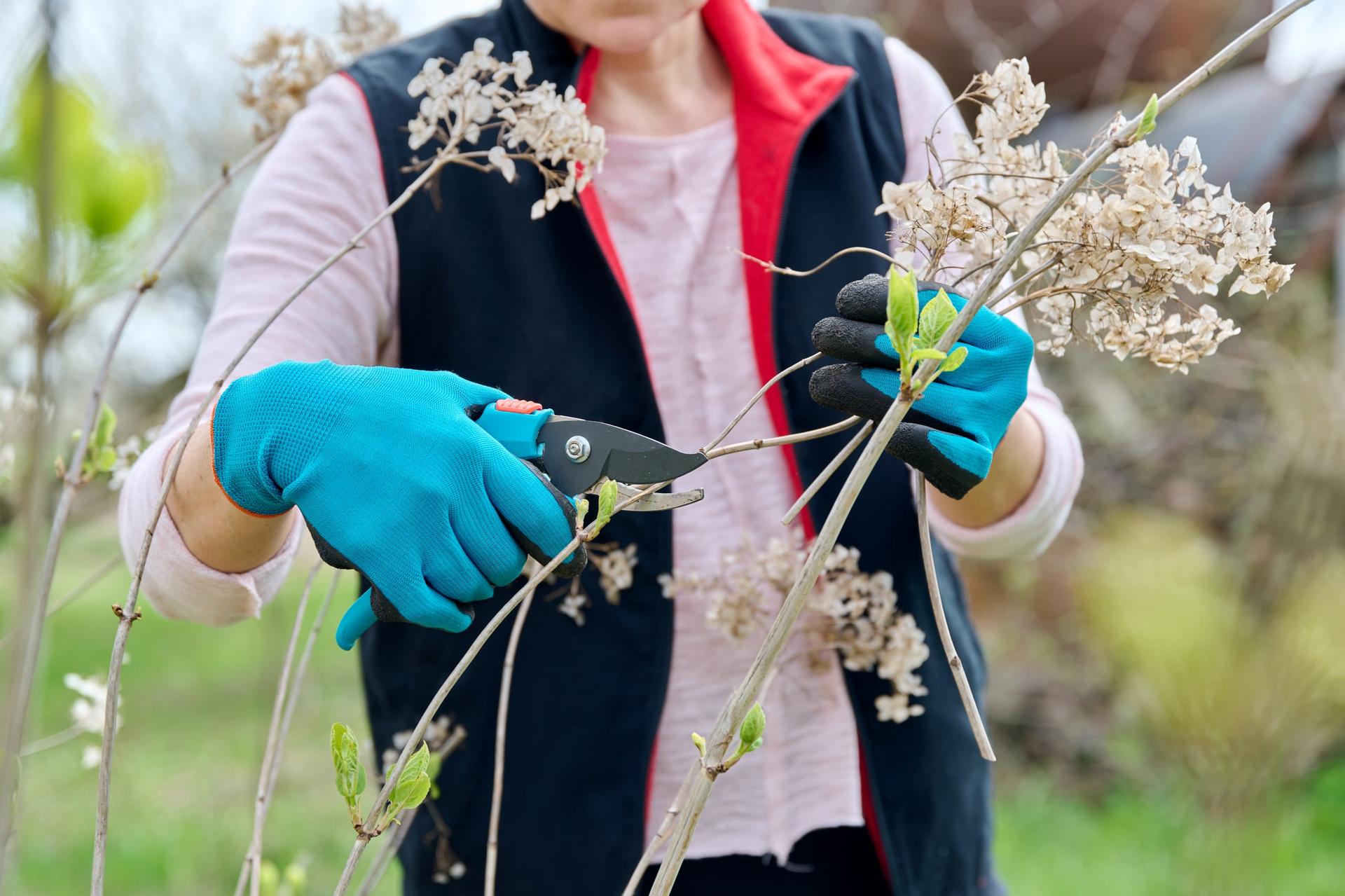
Frost decides when you may cut, not that you should. Iowa State Extension is blunt: it is "not necessary to clear cut the perennial garden after the first freeze of the season".
Cut where there is a disease or a pest. Iowa State names the cases: "The plant debris of bee balm and phlox with heavy powdery mildew infestations, or iris with borer problems, is best removed from the garden and destroyed." It does not go in your compost bin: the bar is a pile that "heats up to at least 140°F", and "Most home compost piles do not reach this temperature, but most municipal composting facilities do". Set it out for collection. The vegetable garden is the one bed that gets a full clean-out, "removing all leaves, stems, fruit, and other plant parts after the first frost". The Toronto Master Gardeners add one: "Remove leaves if blackened and destroyed by frost (e.g. Hosta, Hemerocallis)".
Leave the rest standing. The Toronto Master Gardeners keep "seedpods and flower heads that will provide winter interest or food for the birds", naming astilbes, grasses, sedums, Rudbeckia and Echinacea. The City of Toronto explains the stems: "Some bees hibernate and lay eggs in hollow stems. If you do cut, leave the bottom 8 inches in place."
NC State ran the study behind this. Volunteers sampled nearly 3,000 stems from 20 gardens in 10 North Carolina counties. About 1.5% held nests, and none were in first-winter stems, the ones that grew and died the same year. So: "if you trim between the first fall frost and the last spring frost, you won't be discarding bees". Those gardeners left a stubble of 12 to 24 inches, giving next year's bees cut ends to enter. One condition: "if you trimmed or deadheaded any stems earlier in the season, do not cut them again in the winter". Toronto's 8 inches and the study's 12 to 24 inches come from two bodies, and neither averages the other.
Leaves belong in beds, not on turf
The City's yard waste page says to "Consider leaving fallen leaves and branches on your lawn in the fall". The Toronto Master Gardeners say the opposite: "Leaves left on the lawn all winter will encourage snow mold". Iowa State splits the ground. In beds leaves are the benefit. On grass a thick layer "prevents the turfgrass plants from manufacturing and storing food prior to winter, and can block light". So mow it in or move it, which is what the City's own landscaping page asks for: "Rake leaves directly into your garden beds".
While the ground still works: plant for spring
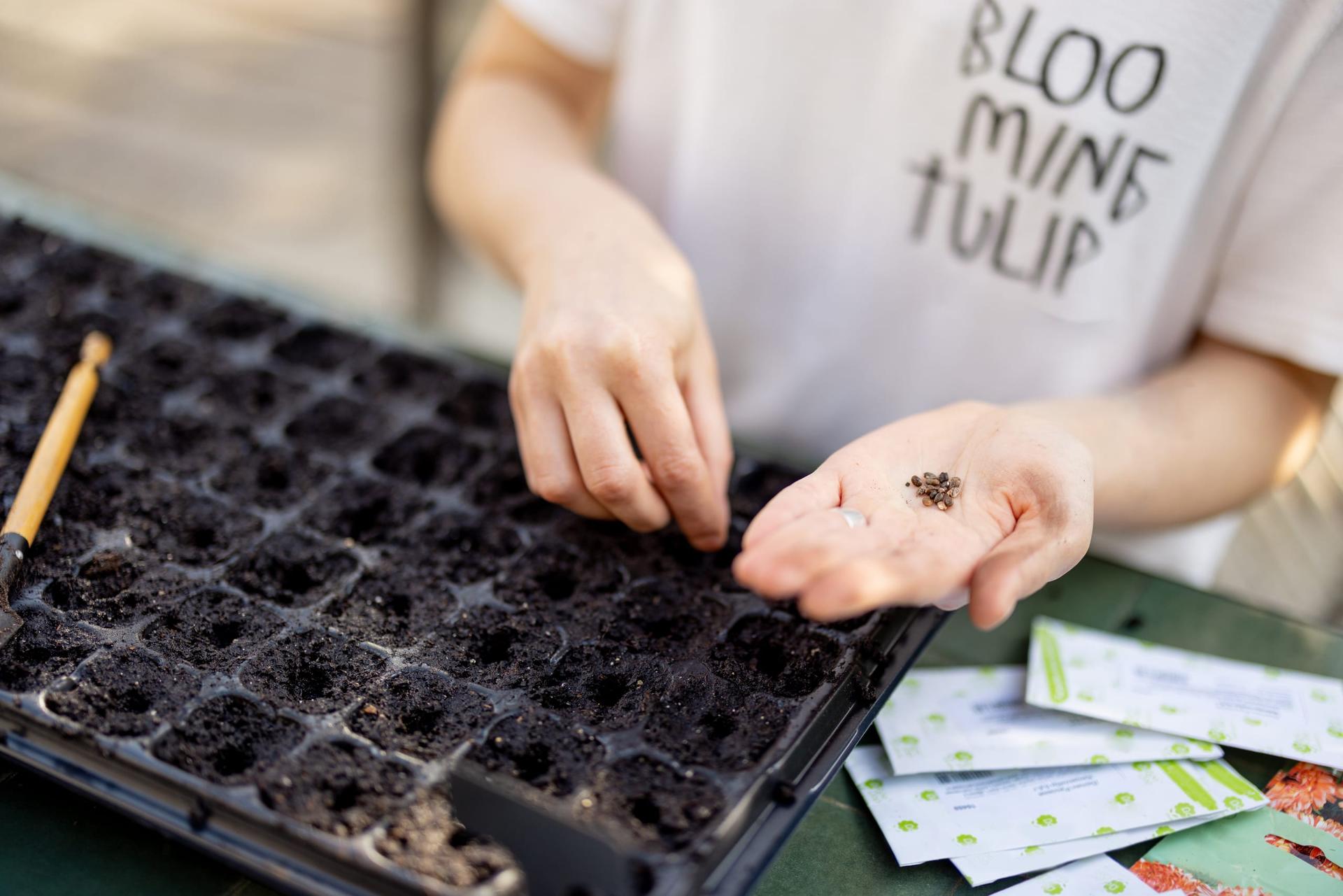
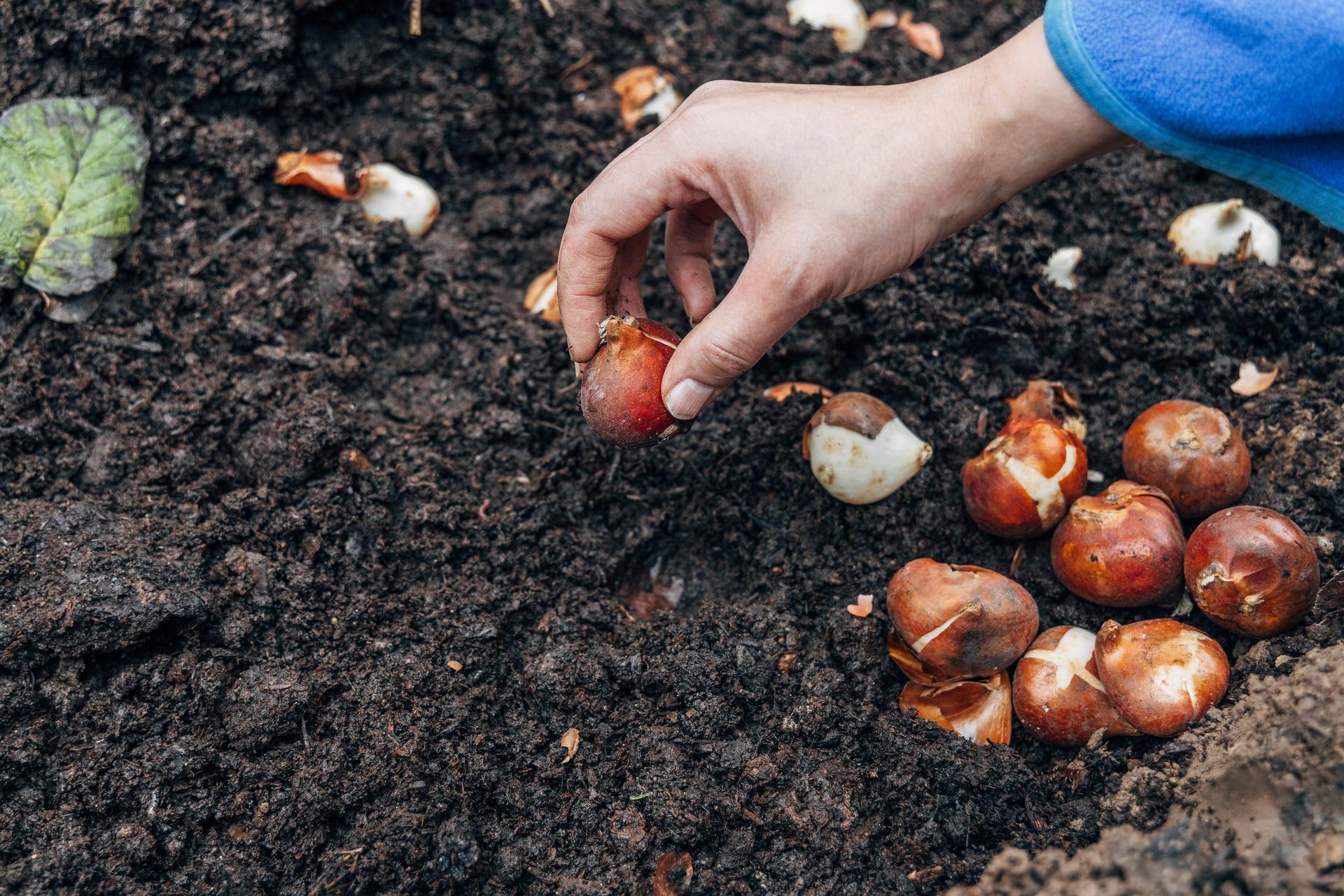
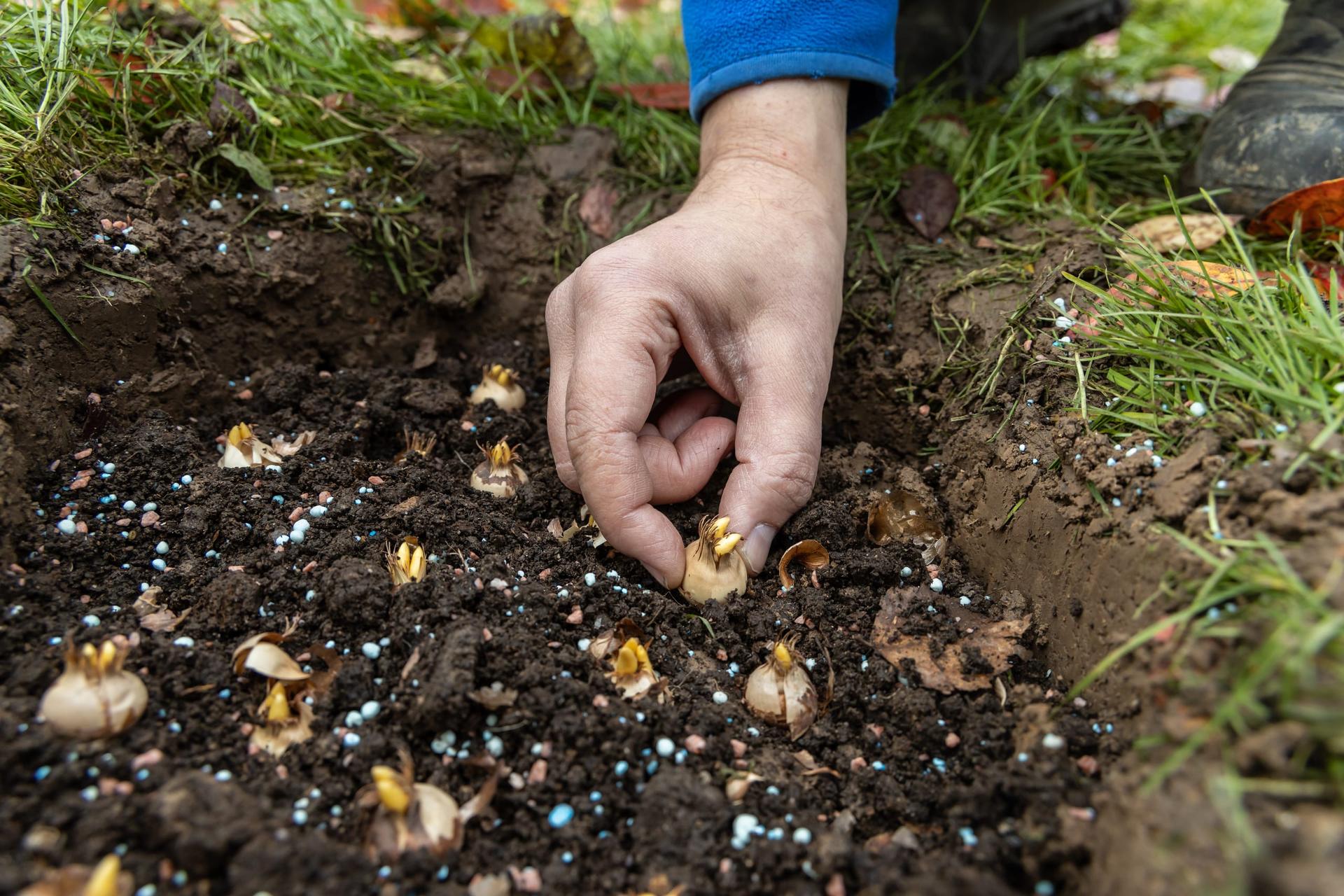
Spring bulbs are the one planting job left, and soil temperature is the trigger. The NC State Extension Gardener Handbook says to "wait until the soil temperature is below 60°F (at the optimal planting depth)", which is 15.6 °C. The bulb then needs a cold period that "ranges from six weeks to 20 weeks depending on the species or cultivar".
That handbook gives months by zone too, and those are USDA zones. Natural Resources Canada ran the comparison and found "no simple conversions between the two systems", so use the soil rule and leave the months alone.
Minnesota Extension says autumn planting "helps the bulb to grow roots before the ground freezes". Its exception for November: "Tulips are one exception; you can plant these as late as you can get them into the soil". The Toronto Master Gardeners set the same limit, "as long as the ground can still be worked before freeze-up".
Before freeze-up: water the evergreens
Iowa State explains the risk. Evergreens "lose considerable amounts of moisture through their needles or leaves during winter", and "once the ground freezes, plant roots can no longer absorb water". The result is brown needles in spring. Most at risk are "boxwoods, rhododendrons, arborvitae, and yews".
So keep watering: "Water regularly until the ground freezes in winter". The Toronto Master Gardeners give the interval: in dry weather, "water deeply once every seven to 10 days". Landscape Ontario carries "Continue watering trees and shrubs until the ground freezes" in its September, October and November lists alike. Its November list also says to "Turn off outside water connections. Drain garden hoses". The watering rule runs until the ground freezes, so the tap comes off last.
Two more jobs. Heavy wet snow splays multi-stem evergreens, so Iowa State ties them: "wrap the plants with twine or rope in the fall. Promptly remove the support in the spring". Roses get one autumn cut. The Toronto Master Gardeners shorten "hybrid tea, floribunda and grandiflora roses to about 18″ to avoid wind damage and possible upheaval of roots in strong winds". That is a shortening against wind, not a prune. The cut that shapes the plant waits for early spring. Cutting for shape now pushes soft growth that will not harden off, meaning it will not toughen up before winter.
After the ground freezes: mulch, and not a day sooner
Winter mulch is not a blanket. Iowa State: "apply about four inches of mulch over the crown of the plant after the ground freezes". Its warning: "Do not place the mulch on too early as it can slow plants from going dormant". Early mulch also leaves plants "more susceptible to damage from cold temperatures". The Toronto Master Gardeners agree. Roses take the same timing: hill soil over the graft, the join where a named rose is fused onto a hardier root, "After the ground has frozen".
Mulch is there for frost heaving. That is when "the freeze-thaw cycle of the upper layer of soil works the crown and root system of the perennial plant out of the ground".
| Job | Depth | Source |
|---|---|---|
| Over a perennial crown, after the ground freezes | about four inches | https://yardandgarden.extension.iastate.edu/faq/how-should-i-prepare-my-perennial-beds-winter |
| Extra cover over a tender perennial, placed late in the fall | 6 to 8 inches | https://yardandgarden.extension.iastate.edu/faq/how-should-i-prepare-my-perennial-beds-winter |
| Around shrubs and new plantings, against heaving | 4 to 6 inches | https://extension.umn.edu/garden-and-home/yard-and-garden/lawns-and-landscapes-in-minnesota/protecting-trees-and-shrubs-in-winter |
| Over the roots of a newly planted tree or shrub | 3 to 4 inches, pulled about 6 inches off the trunk | https://extension.umn.edu/garden-and-home/yard-and-garden/lawns-and-landscapes-in-minnesota/protecting-trees-and-shrubs-in-winter |
| Fallen leaves raked over a bed | six to eight inches, anchored with branches | https://www.torontomastergardeners.ca/gardeningguides/putting-the-garden-to-bed-a-toronto-master-gardeners-guide/ |
How do you know it has frozen? Neither soil nor ground temperature appears in the Environment and Climate Change Canada normals for these four stations; the only ground row is snow depth. So push a spade in. If the top few inches resist, that is your signal.
Do not wait for snow. At Pearson an average November has 2.3 days with at least 1 cm of snow on the ground, against 12.2 in December. At Buttonville it is 2.9 and 15.4. In November mulch, not snow, is what holds the soil temperature steady.
The collection dates that close your season
Whatever you cut has to go somewhere, and the trucks stop before winter does.
| Municipality | Window | What the page says | Source |
|---|---|---|---|
| Toronto | every other week, around mid-March to mid-December | "as well as Christmas trees in January" | https://www.toronto.ca/services-payments/recycling-organics-garbage/houses/what-goes-in-my-bin/yard-waste/ |
| Markham | every other week, April to December | "Yard material: Collected every other week (April to December)" | https://www.markham.ca/neighbourhood-services/recycling-garbage/what-goes-where/collection-schedules |
| Oakville loose leaf | six zone weeks each fall, late October into early December | "leaves put out after the pickup dates will not be collected", and "Homeowners are responsible for removing uncollected leaves or bagging them for Halton Region yard waste collection"; the 2026 program runs October 26 to December 4 | https://www.oakville.ca/transportation-roads/roads-sidewalks/loose-leaf-collection/ |
| Vaughan | seasonal, weekly collection restarts in late April | "Leaf and yard waste is collected seasonally", with no fall end date on the page and a link to the City's zone collection schedule; over winter it asks residents to "consider keeping some leaves on the ground" | https://www.vaughan.ca/residential/garbage-and-recycling/leaf-yard-and-christmas-tree-waste |
The spring restart is why you leave things standing now. Two of those four pages also name a temperature for it, and they do not name the same one.
| City | Published threshold | Source |
|---|---|---|
| Toronto | "until the temperature stays above 10 degrees (day and night) for at least a week" | https://www.toronto.ca/services-payments/recycling-organics-garbage/houses/what-goes-in-my-bin/yard-waste/ |
| Vaughan | "around 15 degrees Celsius and above" | https://www.vaughan.ca/residential/garbage-and-recycling/leaf-yard-and-christmas-tree-waste |
One region, two calendars
Do not average the frost dates. A 7a lakeshore garden and a 5b or 6a garden at the edge of the region are weeks apart on the same task. Work from the station nearest you: Toronto City for the core and the lakeshore, Pearson for Etobicoke and Peel, Buttonville for North York, Scarborough and York, Oshawa for Durham.
Frequently asked questions
What temperature does the first frost start?
Environment and Climate Change Canada counts a frost as a night when the daily minimum air temperature reached 0 °C or below. SDSU Extension puts frost formation a little higher, in air "loosely defined within 33 to 36 degrees Fahrenheit".
Can you get frost at 4 degrees Celsius?
Not usually. SDSU Extension names 33 to 36 degrees Fahrenheit, or 0.6 to 2.2 °C, as the air band where frost forms, because "Surfaces cool more quickly than the surrounding air". 4 °C sits above that band. The night to protect against is a clear, still one forecast near plus two.
Is 32 degrees a killing frost?
Not by SDSU Extension's definition. 32 degrees Fahrenheit, or 0 °C, is a freeze. The "hard freeze" or "killing freeze" line sits lower, at 28 degrees Fahrenheit, which is (28 - 32) x 5/9 = -2.2 °C.
When should I cut back hostas?
After frost has taken them. The Toronto Master Gardeners say to "Remove leaves if blackened and destroyed by frost (e.g. Hosta, Hemerocallis)", which puts hostas among the few that come out rather than standing over winter.
How do you know when a frost is coming?
Watch the dew point, not just the low. SDSU Extension calls it "an important factor in frost risk". Above 32 degrees Fahrenheit, "frost formation is less likely because moisture condenses as liquid rather than freezing". Below it, "frost is more likely, especially in dry air, which cools faster than humid air".
Is it too late to plant tulips in November?
Usually not. The NC State handbook's trigger is soil "below 60°F", or 15.6 °C, at planting depth, not a month. Minnesota Extension makes tulips the exception to the general fall bulb rule: "you can plant these as late as you can get them into the soil."
Sources (27)
- Canadian Climate Normals 1991-2020: Toronto City, climate ID 6158355 · Environment and Climate Change Canada (retrieved )
- Canadian Climate Normals 1991-2020: Toronto Lester B. Pearson Int'l A, climate ID 6158733 · Environment and Climate Change Canada (retrieved )
- Canadian Climate Normals 1991-2020: Toronto Buttonville A, climate ID 6158409 · Environment and Climate Change Canada (retrieved )
- Canadian Climate Normals 1991-2020: Oshawa, climate ID 6155875 · Environment and Climate Change Canada (retrieved )
- Canadian Climate Normals 1991-2020: Toronto Island, climate ID 6158665 · Environment and Climate Change Canada (retrieved )
- Canadian Climate Normals 1991-2020: Burlington Piers, climate ID 6151061 · Environment and Climate Change Canada (retrieved )
- Canadian Climate Normals 1991-2020: Udora, climate ID 6119055 · Environment and Climate Change Canada (retrieved )
- Canadian Climate Normals 1991-2020: stations within 100 km of Toronto · Environment and Climate Change Canada (retrieved )
- Plant Hardiness Zone by Municipality · Natural Resources Canada, Canada's Plant Hardiness Site (retrieved )
- Extreme Minimum Temperature Models · Natural Resources Canada, Canada's Plant Hardiness Site (retrieved )
- Frost and Freeze Impacts on Plants · SDSU Extension (retrieved )
- Storing Tender "Bulbs" for Winter · Wisconsin Horticulture, UW-Madison Division of Extension (retrieved )
- Managing Fallen Leaves and Fall Cleanup · Iowa State University Extension and Outreach (retrieved )
- How should I prepare my perennial beds for winter? · Iowa State University Extension and Outreach (retrieved )
- Protecting Trees and Shrubs in Winter · Iowa State University Extension and Outreach (retrieved )
- Protecting trees and shrubs in winter · University of Minnesota Extension (retrieved )
- Planting bulbs, tubers and rhizomes · University of Minnesota Extension (retrieved )
- Garden Cleanup for Pollinators: Trim Perennial Stems in Their First Winter · NC State Extension (retrieved )
- Extension Gardener Handbook, Chapter 10: Herbaceous Ornamentals · NC State Extension (retrieved )
- Putting the Garden to Bed: A Toronto Master Gardeners Guide · Toronto Master Gardeners (retrieved )
- Fall gardening checklist · Landscape Ontario Horticultural Trades Association (retrieved )
- Yard Waste · City of Toronto (retrieved )
- How to Help Wild Bees & Other Native Pollinators · City of Toronto (retrieved )
- Sustainable Landscaping · City of Toronto (retrieved )
- Collection Schedules · City of Markham (retrieved )
- Loose Leaf Collection · Town of Oakville (retrieved )
- Leaf, Yard and Christmas Tree Waste · City of Vaughan (retrieved )
How this guide was made
Built on 27 August 2026. Frost dates, freeze-night counts and snow-depth counts were read from Environment and Climate Change Canada's 1991-2020 Canadian Climate Normals, one station page at a time. Every one of the seven stations the agency lists inside the GTA was opened and checked for a frost-free table, and the four that carry one (Toronto City, Toronto Pearson, Oshawa and Toronto Buttonville) were recorded with each element's record length, missing years and quality code. Hardiness zones for 22 GTA municipalities were checked one municipality at a time against Natural Resources Canada's Plant Hardiness Zone by Municipality lookup, matching on the Ontario row. Task thresholds come from SDSU Extension, Wisconsin Horticulture, Iowa State Extension, University of Minnesota Extension, the NC State Extension Gardener Handbook and NC State's stem-nesting study, the Toronto Master Gardeners and Landscape Ontario. Collection windows were read on the City of Toronto, City of Markham, Town of Oakville and City of Vaughan pages the same day.