Key takeaways
- Six of 451 GTA homes in Health Canada's 2009-2011 survey measured above the 200 Bq/m3 guideline, 1.3% of the sample, and none was above 600 Bq/m3.
- Halton is the highest GTA region on both available bases (4.1% of 97 homes in 2009-2011, 3.8% in Health Canada's pooled figures) and Toronto is second at 2.7% and 1.8%.
- The 4.6% and 8% Ontario figures are the same Health Canada survey counted two ways: 4.6% is population-weighted, 8.2% is raw.
- A long-term kit runs $47.88 plus a $16.50 return label to $75 all-inclusive from Ontario sellers, and must sit in the lowest lived-in room for at least 91 days.
- Above 200 Bq/m3, Health Canada's guidance for homes is a single deadline of within 1 year, sooner the higher the level. Two GTA health units still publish an older two-tier version.
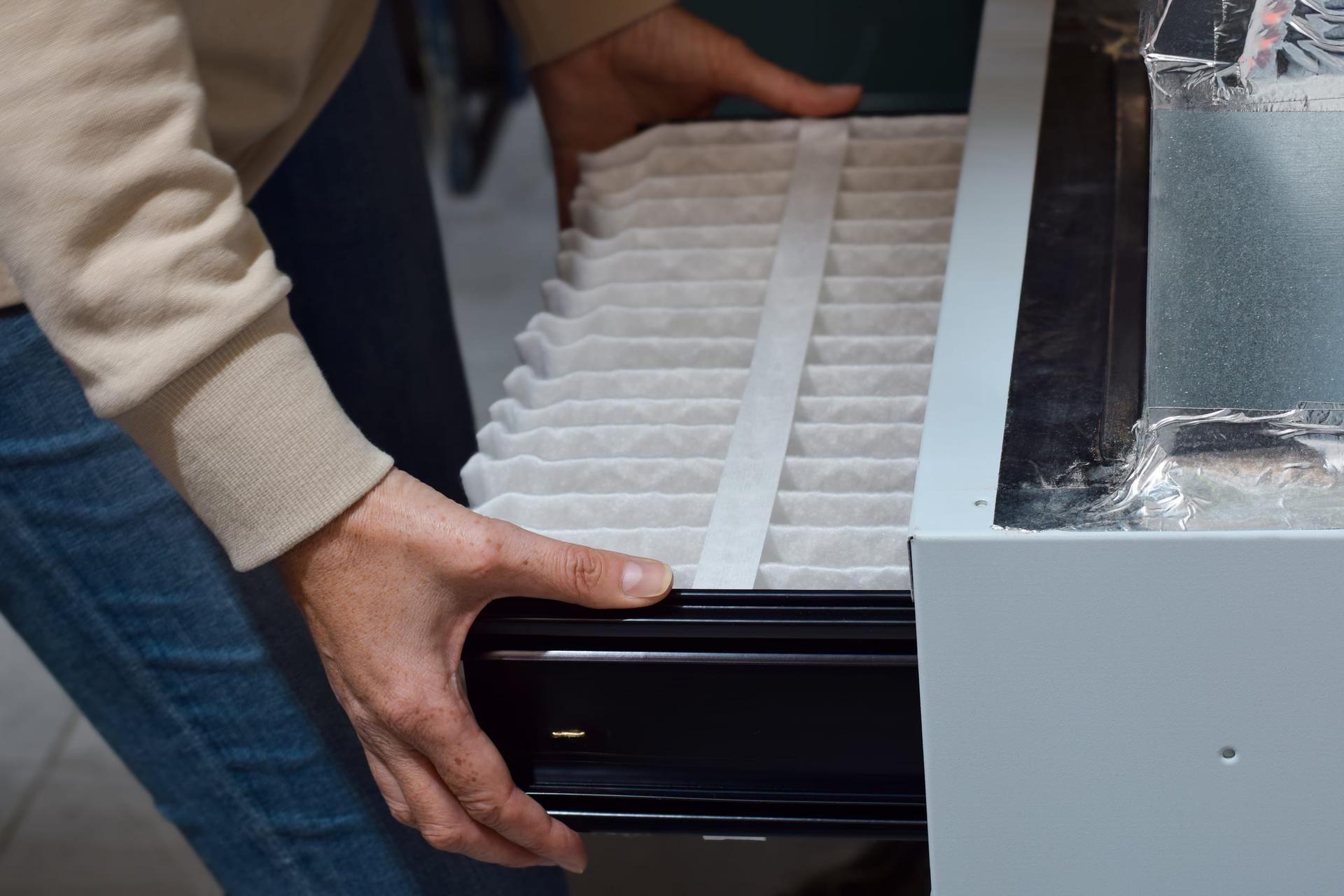
The GTA measures low for radon. Health Canada tested 451 homes across the five GTA health regions between 2009 and 2011, recruited by random digit dialling. Six came back above the 200 Bq/m3 guideline (becquerels per cubic metre, a count of how much radon breaks down each second in a cubic metre of air). That is 1.3% of the sample. None was above 600, and the median GTA home read 23. None of that tells you about your own house. Health Canada says so in its own report: the survey "should not be used as a tool to determine radon risk potential or whether or not to test a home for radon". A long-term kit costs $47.88 to $75 from Ontario sellers and runs at least 91 days.
What 451 GTA homes measured
Region | Homes tested | Median (Bq/m3) | Highest reading | Above 200 Bq/m3 | % above 200 | 95% interval |
|---|---|---|---|---|---|---|
Toronto | 74 | 19.5 | 292 | 2 | 2.7% | 0.7% to 9.3% |
Peel | 90 | 23 | 186 | 0 | 0.0% | 0 to 4.1% |
York | 95 | 20 | 130 | 0 | 0.0% | 0 to 3.9% |
Durham | 95 | 23 | 177 | 0 | 0.0% | 0 to 3.9% |
Halton | 97 | 27 | 280 | 4 | 4.1% | 1.6% to 10.1% |
GTA, all five | 451 | 23 | 292 | 6 | 1.3% | 0.6% to 2.9% |
We computed that from Health Canada's open dataset. One row is one home, given one long-term alpha-track test through the heating season. The detector is a small plastic device that records radiation marks, read by a lab afterwards. The region column is Health Canada's own 2007 health-region code. In the GTA those are the five regions' municipal boundaries, so no location was inferred. Four of the five rows match Table 5 of the final report. Halton reads 4.1% here against 4.9% there, because the open file carries five fewer Halton homes.
Four of the six homes above the guideline were in Halton: two in Halton Hills, one in Oakville, one in Burlington. The other two were in Toronto. In the Toronto postal area with the highest reading, the only two other homes tested came in below the 15 Bq/m3 detection limit.
Health Canada pools this survey with one from 2012-2013 and publishes its own shares: Toronto 1.8%, Peel 0.0%, York 0.0%, Durham 0.5% and Halton 3.8%. Those rest on more homes. On either basis, Halton is the highest GTA region and Toronto is second.
A zero count is not an all-clear. Peel, York and Durham recorded no homes above the guideline, but on samples of 90 to 95. The interval around a zero that size still reaches about 4%. York Region tested 474 of its own residents' homes between November 2017 and August 2018, each for at least 91 days. One (0.2%) was above the guideline and 30 (6.3%) were above 100 Bq/m3, on an average of 47.4. Municipal averages ran from Richmond Hill at 38 to King at 75. That was a volunteer sample, not random digit dialling, so the two are not interchangeable. It still found the home a zero count said nothing about.
Why the Ontario figures you see elsewhere are bigger
Two Ontario percentages circulate and look contradictory. They are one survey counted two ways, and Health Canada's report publishes both: 8.2% of surveyed Ontario homes above the guideline raw, and 4.6% population-weighted. The survey sampled about 100 homes per health region, whatever the population. A raw pool gives a region of 30,000 people the same weight as Toronto. Public Health Ontario's 4.6% is the weighted number and Take Action on Radon's 8% is the raw one. Our own count of the raw figure is 8.1%. Neither is wrong, and neither is a GTA number.
Toronto carries a third figure. Toronto Public Health says "An estimated seven per cent of buildings in Toronto, including homes, workplaces and schools, have levels of radon that may pose a health risk". That counts buildings, not homes, and "may pose a health risk" is not the same test as an annual average above 200 Bq/m3. Toronto's measured share is 1.8% pooled and 2.7% in the survey. The City's estimate sits 2.6 to 3.9 times higher (7 divided by 2.7 = 2.6, and 7 divided by 1.8 = 3.9). The page cites no source for it.
What a radon map can and cannot tell you
The official measurements sit in two places: the open dataset and the per-health-region map Health Canada built from it. Both count homes given long-term tests. Most maps that rank for radon searches are vendor maps of their own customers' readings. That samples who shops, not the housing stock. Even an official map is a probability for an area, never a reading for a house. Durham Region puts that at street level: "Radon levels can vary, even between homes on the same street".
What the 200 Bq/m3 guideline means
The Canadian guideline is 200 Bq/m3, as an average annual level in the normal occupancy area. Below it, Health Canada's position is that "the health risk from radon exposure below the Canadian guideline is small" and that "there is no level that is considered risk free".
Radon is the second leading cause of lung cancer, after smoking. Peterson and colleagues estimated in 2013 that 13.6% of Ontario lung cancer deaths are attributable to radon: "847 (95 % CI 686, 1,039) lung cancer deaths each year, approximately 84 % of these in ever-smokers", on 2007 mortality data. Toronto Public Health gives a local version: "In Toronto, 10 deaths related to radon exposure could be prevented each year if radon levels were reduced below the Canadian radon guideline of 200 Bq/m3". Halton Region names the interaction behind most of it: "Exposure to both radon and tobacco smoke significantly increases your risk of lung cancer".
How to test, and what it costs
Test for at least 91 days, with at least 91 of them in the heating season. So start between September and April. Put the detector on the lowest level you actually live in. Pick a room you use four or more hours a day, at breathing height. Health Canada's normal occupancy area leaves out crawl spaces, unfinished basements, cold rooms, furnace rooms and laundry rooms. It takes in a finished basement room or office, and a basement apartment.
| Item | Low | High | Unit |
|---|---|---|---|
| Lex Scientific LEXCheck kit | $47.88 | $47.88 | per kit, lab fee in, postage extra |
| Lex Scientific return label | $16.50 | $16.50 | optional, same page |
| Canada Radon alpha track kit | $49.95 | $49.95 | per kit, lab fee in, postage extra |
| RadonTest.ca kit | $75 | $75 | all-inclusive, both ways, before tax |
| Airthings Corentium Home, RadonTest.ca | $169.99 | $169.99 | reusable monitor, before tax |
| Airthings Corentium Home, Canada Radon | $179.95 | $179.95 | same monitor, second seller, before tax |
| Airthings Wave Plus monitor | $299.95 | $299.95 | continuous radon and air quality |
| Breathe Radon Free, long-term test | $299 | $299 | 91+ day test, HST in |
| Breathe Radon Free, residential test | $99 | $99 | 3 to 7 day screening, HST in |
All nine Ontario kit sellers listed by Take Action on Radon include the lab fee. Return postage is what varies. Lex Scientific's $47.88 kit plus its $16.50 return label is $64.38, close to RadonTest.ca's $75 all-in price before tax.
A digital monitor is reusable and has no lab fee. Health Canada asks you to pick one that "has passed the C-NRPP performance testing for conducting long-term radon measurements in homes". C-NRPP is the Canadian National Radon Proficiency Program, which certifies both radon devices and the people who install systems. Breathe Radon Free's $99 test runs 3 to 7 days, under Health Canada's threshold and under the three-month minimum Tarion needs for a claim. Its $299 tier meets both.
Borrowing a detector from a GTA library
Peel Region names three lenders: Brampton, Caledon and Mississauga public libraries, each for its own residents. Brampton lends an Airthings Corentium Home for 30 days, free with a card in good standing. Burlington lends one for 28 days, holdable and not renewable, and Milton and Vaughan for 21 days. Aurora lends one too, and Take Action on Radon's list adds Scugog Memorial Public Library.
Every loan is a digital monitor for 14 to 30 days, against a 91-day decision threshold. Vaughan Public Libraries calls the device "a short-term screening tool". Borrow one to see where you stand, then buy a kit for the number you act on. Toronto is the gap: Tarion tells Ontarians to "check in with your local library", and we found no radon detector in Toronto Public Library's collection in August 2026.
If your test comes back above 200
Start with the timeline, because two GTA health units publish a different one. Health Canada's guidance for homes is one deadline: "... take corrective action to lower the level within 1 year. The higher the radon concentrations, the sooner action should be taken ...". Its technical guide says the same, and adds that a result above the guideline needs no re-test. You mitigate.
York Region's page says "Health Canada recommends homes with radon levels between 200 and 600 Bq/m3 be fixed within two years; homes with radon levels above 600 Bq/m3 should be fixed within one year". It sources that to a 2014 Health Canada document, and Peel publishes the same split. That two-tier table is Health Canada's current guidance for public buildings: schools, hospitals, care facilities and detention centres. For homes, both current Health Canada pages say one year.
One year, not two, for a home above 200
If your health unit's page gives you two years at 250 Bq/m3, check it against Health Canada's guideline page. That two-tier split was Health Canada's older homes advice, and it is what Health Canada still publishes for public buildings. Its current homes guidance is action within 1 year, sooner the higher the reading.
The standard fix is sub-slab depressurization. That is a pipe through the foundation floor to an outside wall or the roof line, with a fan drawing radon out before it enters. Health Canada asks that the contractor be C-NRPP certified. C-NRPP publishes the questions to ask: proof of certification and liability insurance, references, and a written plan with diagnostic testing. Ask too for post-mitigation tests showing the level came down. You can look a company up before you sign.
| Item | Low | High | Unit |
|---|---|---|---|
| Breathe Radon Free, sub-slab system | $2,800 | $3,800 | installed, HST in, estimate before site visit |
| Radon Hero, one foundation level | $2,699 | $2,699 | plus HST, eastern Ontario |
| Take Action on Radon, published range | $3,000 | $11,000 | national, installed |
| Take Action on Radon, 2013 to 2021 average | $2,700 | $2,700 | national, historic average |
| Health Canada, sub-slab depressurization | $2,000 | $3,000 | national, materials and labour, Feb 2023 |
| Health Canada, electricity for the fan | $50 | $75 | per year, national |
| Health Canada, fan replacement | $200 | $300 | national, fan lasts five to ten or more years |
Health Canada's $2,000 to $3,000 is the official published number, dated February 2023, and Ontario rate cards now start above it. Its $200 to $300 fan replacement range has aged the same way: one supplier lists the standard fan at $349.99 for the part alone.
Then it is $50 to $75 a year to run the fan, which "should NEVER be turned off; it must run continuously for the system to work properly". Retest every five years while a system runs. The Canadian Lung Association's Lungs Matter program pays up to $1,500 toward mitigation. It is open to people diagnosed with lung cancer or in low and moderate income households, with an Ontario household income ceiling of $105,100. It needs a 90 day test above 200 Bq/m3 from a C-NRPP certified kit. It will not fund a job already done.
New builds, condos and rentals
Ontario's 2024 Building Code requires new houses to have a rough-in for a radon system, effective January 1, 2025. The building officials' advisory puts it plainly: "A sub-slab depressurization system rough-in is also required for all Part 9 residential uses". CARST, the association that runs C-NRPP, adds the part an owner can act on. The rough-in "does not reduce radon; it's simply the beginning of a system", and it "must be properly capped, sealed and labeled, otherwise it could be introducing radon into the house". Go and look at the capped pipe in your basement floor.
Tarion covers radon remediation, and its limits turn on when the first Agreement of Purchase and Sale was signed. Before February 1, 2021, the maximum is $15,000 for "warranted damage caused by environmentally harmful substances or hazards". On or after that date it is $50,000, so a 2019 build sits in the $15,000 tier. Coverage "remains in effect for up to 7 years even if the home is sold". To claim, both the kit and any professional must be C-NRPP certified, and results must "span a minimum three-month period". A condo owner tests the unit, and the corporation tests the common elements.
Ontario does not require a landlord to test. The duty that exists is good repair, under section 20 of the Residential Tenancies Act. Health Canada's action guide records that "administrative decision makers have ruled that these provisions are violated by radon levels over Health Canada Guidelines", citing Landlord and Tenant Board decision CET-67599-17.
Frequently asked questions
What areas in Ontario are high in radon?
Not the GTA. Health Canada's report found that in Ontario, "13 of 36 Health Regions (greater than one third of the Health Regions) had more than 10% of the homes test above the guideline". None of those thirteen is a GTA health region. Take Action on Radon puts the worst Ontario regions at up to 19% of homes, all of them outside the GTA.
What type of home is more likely to have radon?
No type reliably is. Health Canada: "Radon concentration levels will vary from one house to another, even if they are similar designs and next door to each other". Tarion puts it as soil rather than age.
How much does a radon test kit cost in Canada?
From Ontario sellers, $47.88 to $75 for a long-term alpha-track kit. All nine sellers listed by Take Action on Radon include the lab fee, so return postage is the variable. Lex Scientific charges $16.50 for a return label, and RadonTest.ca's $75 covers shipping both ways before tax.
Is there a free radon test kit in Ontario?
There is free borrowing rather than a free kit. Eight GTA library systems lend a digital radon detector free with a card, for 14 to 30 days, which screens rather than decides. York Region notes that a free kit may be available through Take Action on Radon's White Ribbon program for people diagnosed with lung cancer.
How much does radon mitigation cost in Ontario?
One eastern-Ontario company's published rate is $2,699 plus HST for one foundation level. One Ontario company publishes a $2,800 to $3,800 band with HST included. Health Canada's national guide of February 2023 says $2,000 to $3,000, and Take Action on Radon publishes a national range of $3,000 to $11,000.
Which radon map should I use for Ontario?
Health Canada's per-health-region map on the health-infobase site, and the open dataset behind it. Vendor postal-code maps are built from their own users' readings instead.
Sources (40)
- Cross-Canada Survey of Radon Concentrations in Homes (open data, 2009-2011) · Health Canada, National Radon Program (retrieved )
- Cross-Canada Survey of Radon Concentrations in Homes, final report · Health Canada (retrieved )
- Radon Action Month in Canada (per-health-region map) · Public Health Agency of Canada / Health Canada Radiation Protection Bureau (retrieved )
- Radon Test Your Home Study: Assessing Radon Levels in York Region · York Region Public Health (retrieved )
- Radon: Test Your Home · Regional Municipality of York (retrieved )
- Radon and Your Health · City of Toronto (Toronto Public Health) (retrieved )
- Radon in Ontario · Take Action on Radon (retrieved )
- Lung cancer risk from radon in Ontario, Canada: how many lung cancers can we prevent? · Peterson et al., Cancer Causes Control 24(11), 2013 (retrieved )
- Government of Canada radon guideline · Health Canada (retrieved )
- Guide for radon measurements in homes · Health Canada (retrieved )
- Guide for Radon Measurements in Public Buildings · Health Canada (retrieved )
- Testing your home for radon · Health Canada (retrieved )
- About radon · Health Canada (retrieved )
- Radon, Reduction Guide for Canadians · Health Canada (retrieved )
- Reducing radon levels in your home · Health Canada (retrieved )
- Radon action guide for provinces and territories: policies for specific locations · Health Canada (retrieved )
- Radon (protecting your health) · Region of Peel (retrieved )
- Radon · Halton Region Public Health (retrieved )
- Air quality (radon section) · Regional Municipality of Durham (retrieved )
- C-NRPP: Find a professional · C-NRPP, operated by CARST (retrieved )
- C-NRPP: Steps to Reduce Radon · C-NRPP (retrieved )
- Reducing Radon in Your Home · Take Action on Radon (retrieved )
- Radon Monitor Lending Programs · Take Action on Radon (retrieved )
- Radon for Real Estate Agents · CARST (retrieved )
- Lungs Matter: funding for home radon mitigation · Canadian Lung Association (retrieved )
- What is the new home warranty (coverage limits) · Tarion (retrieved )
- How your new home warranty protects you against the dangers of radon gas · Tarion (retrieved )
- 5 common questions about radon testing · Tarion (retrieved )
- Soil gas barrier and radon requirements for the 2024 OBC · OBOA Building Code Advisory Services (retrieved )
- LEXCheck long-term radon test kit (single) · LEX Scientific Inc, Guelph (retrieved )
- Canada Radon store (all products) · Canada Radon (retrieved )
- Radon test kit (product page) · RadonTest.ca (retrieved )
- Services and pricing · Breathe Radon Free (retrieved )
- Radon mitigation pricing (published rate card) · Radon Hero (retrieved )
- Radon mitigation cost in Canada: pro install vs DIY parts · Radon Depot (retrieved )
- Radon detectors (Library of Things) · Brampton Library (retrieved )
- Tech lending information (radon detector) · Burlington Public Library (retrieved )
- Household technology (digital radon detector) · Milton Public Library (retrieved )
- Downloads and digital (digital radon detectors) · Vaughan Public Libraries (retrieved )
- Borrow a radon detector from the library · Aurora Public Library (retrieved )
How this guide was made
The regional table was computed by us from Health Canada's Cross-Canada Survey open dataset (13,814 homes nationally, 451 in the five GTA health regions), checked against Table 5 of Health Canada's own final report and against its pooled per-health-region map. York Region's 2017-2018 study of 474 homes is the corroborating GTA dataset. Prices come from the sellers' and installers' own pages, read on August 26, 2026: three Ontario kit sellers, two Canadian monitor retailers, two Ontario mitigation rate cards and Health Canada's Reduction Guide. Guideline wording, testing rules, lending programs, Tarion limits, Building Code and tenancy material come from the official pages cited beside each claim.