Key takeaways
- GTA companies publish $150 to $200 for a one-storey bungalow and $170 to $300 for a two-storey home; priced by the foot instead, the same work is $1.00 to $2.50 per linear foot.
- The City of Toronto's own maintenance instruction is to clean eavestroughs at least twice a year and check every elbow and outlet for debris.
- Overflowing eavestroughs and plugged downspouts are on the City's published list of basement flooding causes, and the Insurance Bureau of Canada says repeated ice dam damage is treated as a maintenance issue that may not be covered.
- Gutter guards do not end cleaning. At the $1,500 one Toronto company publishes all-in for 200 feet, against the bottom of the $300 to $600 a year another publishes for two cleanings, that is $1,500 / $300 = five years before it breaks even.
- Doing it yourself on a bungalow saves $150 to $200 a visit against $0 to $50 of supplies, but a fall from a ladder accounted for 56 of the 513 renovation-project injuries in the Public Health Agency of Canada's CHIRPP review.
On the price lists GTA companies publish themselves, a one-storey bungalow is $150 to $200 and a two-storey house is $170 to $300. Priced by the foot instead, the same work runs $1.00 to $2.50 per linear foot. So storeys and roofline length set the price, not square footage. At that size the real question is not the cost but whether to pay at all. On a one-storey house with light debris and a ladder in the garage, often not. On anything above the first floor, almost always yes.
What GTA companies actually charge
Every figure below comes from a published price page, credited to its publisher. The spread inside each row is debris load and access.
| Item | Low | High | Unit |
|---|---|---|---|
| Bungalow, one storey (Mantle) | $150 | $200 | per visit |
| One-storey bungalow (Silverlight) | $150 | $175 | per visit |
| Townhouse (Mantle) | $125 | $200 | per visit |
| Two-storey detached (Mantle) | $200 | $275 | per visit |
| Two-storey detached (Silverlight) | $185 | $300 | per visit |
| Two-storey, about 2,000 sq ft (EZ Window Cleaning) | $170 | $230 | per visit |
| Three storeys or large roofline (Mantle) | $275 | $350 | per visit |
| Three-storey detached (Silverlight) | $200 | $350 | per visit |
| Four storeys or estate (Silverlight) | $350 | $500 | per visit |
| Per linear foot, single storey (Mantle) | $1.25 | $1.75 | per ft |
| Per linear foot, two storey (Mantle) | $1.75 | $2.50 | per ft |
| Per linear foot, three storey (Mantle) | $2.50 | $3.50 | per ft |
| Per linear foot, Toronto (Professional Roofers) | $1 | $2.50 | per ft |
| Severely clogged downspout, extra at other companies (Mantle's estimate; Mantle includes flushing) | $25 | $50 | per downspout |
Two things move a quote more than anything else.
Storeys. The scooping is the same. The ladder work is not. Mantle's per-foot rates step from $1.25 to $1.75 at one storey to $1.75 to $2.50 at two and $2.50 to $3.50 at three. That is roughly double, top to bottom, for the same length of trough.
Linear footage, which is just the length of trough around the roof. Mantle puts the average GTA home at 120 to 150 linear feet. Ask how many feet your quote assumes. That is the unit being priced.
Debris load is the third thing that moves a quote, and the one that punishes delay. DT Cleaning in North York starts at $130 for a bungalow and $150 for a two-storey. It then writes up two April 2026 jobs that billed $160 and $175. Both were bungalows, both heavy. Its band for long-neglected systems is $175 to $500, case by case. Professional Roofers prices by the hour instead, at $60 to $100 per hour. A single-storey clean takes two to three hours.
What a quote should include
A cleaning is not just scooping. Silverlight says its price covers debris bagged rather than tossed, downspouts flushed, a test that the water drains, and full cleanup on the ground. Mantle lists the same, plus a check for damage and loose brackets.
Insist on four things in writing:
- Downspouts flushed, not just troughs emptied.
- Debris bagged and removed.
- A water test at the end.
- A written note of anything found: sagging, separated seams, loose hangers, rust.
The City of Toronto has its own advice for hiring an eavestrough contractor on the Mandatory Downspout Disconnection page. Get at least three quotes and ask for references. Sign a written contract stating all the work, site cleanup included, the full price and the payment schedule. The City also names the warning signs. Watch for a contractor who quotes before seeing the job, offers a "special price", or offers a discount to use your home to advertise.
A price quoted sight-unseen is not a price
The City calls quoting before seeing the job a red flag, and the vendor pages explain why. On Mantle's list the same two-storey house is $200 or $275 depending on footage and debris, and lifting guards adds $50 to $100 on top. A firm number over the phone is either a guess or a figure that gets revised on the day.
DIY versus hiring: the honest maths
The saving is real and it is small. Mantle says doing it yourself is doable on a single-storey home with easy access. Its table puts the job at $0 to $50 and three to five hours on your own, against $150 to $350 and one to two hours with a crew. On a bungalow, the published price you save is $150 to $200 a visit.
So the trade is about $200 and an afternoon, twice a year, in exchange for going up a ladder. CHIRPP is the Public Health Agency of Canada's injury database. Its brief on home improvement is built from 2003 emergency department records for patients 15 and older. In it, falls from a ladder are 56 of the 513 injuries logged in home renovation projects. That is the third most common cause, behind power tools and hand tools. CIHI counted almost 654,000 emergency department visits and 152,504 hospital stays for unintentional falls in one year. The average stay was 14.3 days against 7.5 days for all hospital stays.
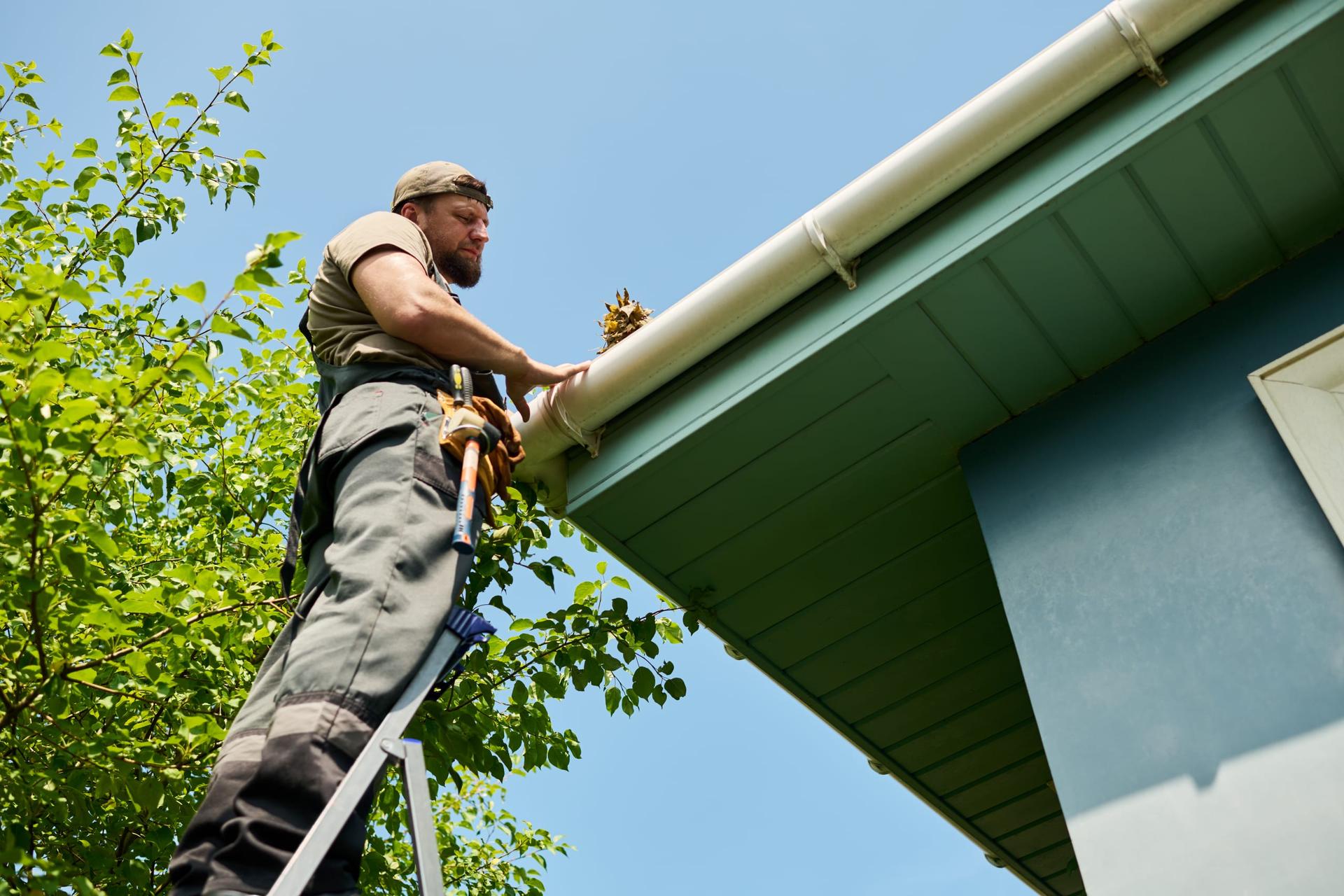
Do it yourself when the house is one storey, the ground is level, the troughs are not blocked solid, and there are no guards to remove.
Pay when any of that is untrue. Above the first floor the ladder has to sit on a slope or a walkway and be moved a dozen times. The crews also carry insurance you do not. DT Cleaning, EZ Window Cleaning, Mantle and RenoHouse publish $2 million of liability cover and Silverlight $5 million. DT Cleaning, EZ, RenoHouse and Silverlight also state WSIB coverage. Pay a casual worker cash to climb your ladder and that risk lands on you. That, not the scooping, is what the $200 buys.
How often, and what actually decides it
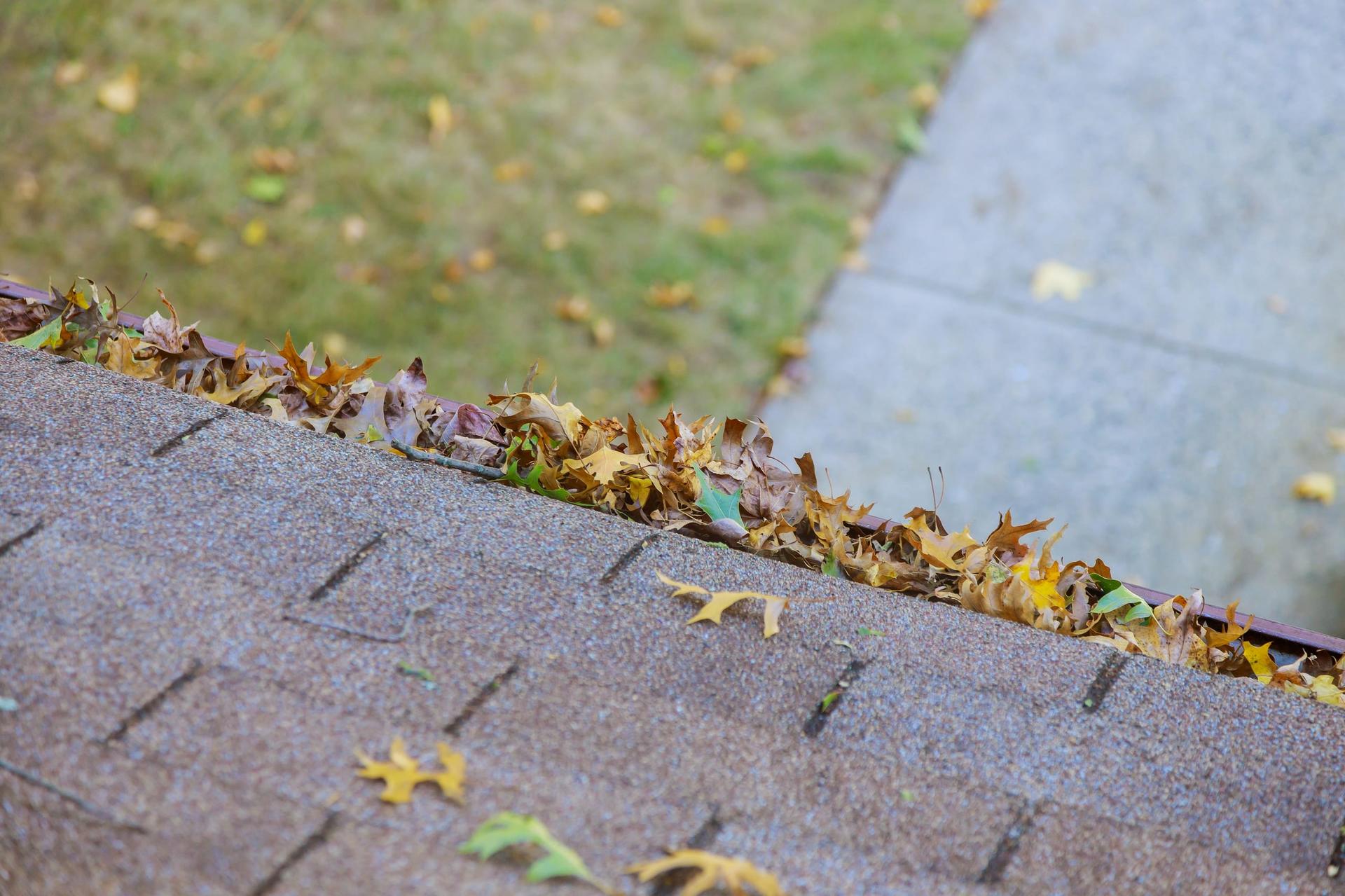
The City of Toronto's instruction is a floor, not a target: clean eavestroughs at least twice a year, and check all elbows and outlets for debris. What grows above your roof decides the rest. DT Cleaning says most North York homes need two cleanings, in spring after the thaw and in late fall after the leaves drop. Homes with pine trees, large maples or other overhanging trees may need three. Mantle adds a mid-summer check for homes surrounded by trees.
Pine is the case Toronto homeowners underestimate. Mantle singles out pine needles as the debris that slips through most guards and packs troughs solid. It flags older tree-lined areas (Highland Creek, Rouge Valley, Birch Cliff) as filling up far faster than newer subdivisions. Toronto's tree canopy covers an estimated 31 per cent of the city, per the 2018 Tree Canopy Study cited in the City's climate risk report. The target is 40 per cent by 2050. Most GTA houses have trees nearby.
Timing matters as much as how often. Mantle says to book the fall clean once the leaves have fully dropped, and puts that window at late November to early December. Clean too early and you pay to do it again.
The winter failure this city is built for
Toronto's version of this starts with a bylaw. Cutting your downspout off the sewer is mandatory here, so your roof water runs onto your own lot, beside your own foundation. The City's guidance warns that the flow may freeze in winter, and tells you not to create dangerous conditions. A blocked trough means the water never reaches the downspout at all. It spills over the front edge of the eave, down the wall, to the foundation.
Above it, the ice dam forms. An ice dam is a ridge of ice at the roof edge that blocks melting snow from draining. The Insurance Bureau of Canada lists three causes: too little attic insulation, poor attic airflow, and piled snow with blocked eavestroughs. It also spells out how the damage happens. Meltwater runs down a warm roof, refreezes at the cold edge, and the trapped water pushes back up under the shingles and into the house.
The insurance line is worth reading twice. IBC says standard home policies commonly cover sudden and accidental water damage from an ice dam. Ongoing or repeated damage "is considered a long-term maintenance issue and may not be covered". A trough you have not cleaned in four years is the second case.
One correction to the usual story. The City's own 2025 climate risk assessment expects freeze-thaw cycles and very cold days to decrease as Toronto warms, while winter and ice storms hold steady. The ice dam risk is not growing. It is simply still there. Once the damage becomes repeated rather than sudden, the Insurance Bureau says it "may not be covered".
What the failure costs
Overflowing eavestroughs and leaking or plugged downspouts sit on the City of Toronto's published list of basement flooding causes. The others on it are cracked foundations, poor lot grading and sewer backups. That is the expensive end. The City now offers up to $6,650 per property in basement flooding protection subsidies. Each line is capped at 80 per cent of the invoiced cost. The caps are up to $1,600 per backwater valve (maximum two devices) and $2,250 for a sump pump (maximum one). Then it is $300 for a battery backup, $500 for a plumbing assessment and $400 to sever and cap a storm connection. In July 2024 the flash floods that swamped Toronto and southern Ontario caused over $940 million in insured damage.
Nearer term, the trough destroys the boards around it: the fascia it hangs on and the soffit under the eave. Mantle publishes a table of what neglect costs in the GTA. Fascia and soffit replacement is $1,500 to $4,000, ice dam removal $500 to $2,000, landscape erosion repair $1,000 to $5,000, foundation repair $3,000 to $10,000 and basement waterproofing $5,000 to $15,000.
Do gutter guards pay for themselves?
Installers say yes. The arithmetic says it is slower than that. DT Cleaning puts payback at "roughly two to three years". That figure assumes you were paying at the top of the cleaning range, and that guards cut maintenance by about 90 per cent. Work it at the bottom of the range and it stretches. DT Cleaning's cheapest number is $7 per linear foot, and that is "for labor only - we do not supply or warranty these guards". Material adds another $2 to $3 a foot. It also lists $7.50 a foot for mid-range aluminum mesh and $9 and up for heavy-duty aluminum. On a 200-foot home those three rates work out to $1,400, $1,500 and $1,800. Its own all-in figure for a 200-foot home is $1,500 for mid-range guards. Its documented Etobicoke job was $2,025 for 286 feet of micro-mesh. RenoHouse puts the Toronto total at $700 to $2,100 including materials and labour, with screens at $1.50 to $4 per foot and micro-mesh at $8 to $15.
Run that against twice-yearly cleaning. At the cheapest published guard price, 200 feet is $1,400. Mantle puts routine cleaning twice a year at $300 to $600. So $1,400 ÷ $300 a year = just under five years to break even at the low end. That is the best case, because guards do not end cleaning. Mantle says they change the type of cleaning needed, and charges $50 to $100 extra per visit to lift and re-seat them. Pine needles and shingle grit go straight through most of them.
Buy guards for a different reason: fewer ladder trips on a tall or awkward house, and less chance of a blocked trough going unnoticed before a freeze. The cleaning saving is a bonus, not the business case.
Frequently asked questions
How much does eavestrough cleaning cost in Toronto?
Published GTA prices run $150 to $200 for a one-storey bungalow and $170 to $300 for a two-storey home. Three-storey and large homes run $200 to $350. Priced by the foot, Toronto companies quote $1.00 to $2.50 per linear foot, rising with height.
How often should I clean my eavestroughs in the GTA?
The City of Toronto says at least twice a year, checking elbows and outlets each time. DT Cleaning says most North York homes need a spring and a late-fall clean, and homes with pine trees, large maples or other overhanging trees may need three.
Is it cheaper to clean them myself?
Yes, by about $150 to $200 a visit on a bungalow, against $0 to $50 of supplies and three to five hours. A fair trade on a one-storey house with easy access. A poor one above the first floor, where falls from ladders were 56 of the 513 renovation-project injuries in the Public Health Agency of Canada's CHIRPP brief.
Will gutter guards mean I never clean again?
No. Mantle says guards change the type of cleaning needed rather than ending it, and charges $50 to $100 extra to lift and re-seat them. DT Cleaning, which installs them, still recommends a light inspection every two to three years because shingle grit builds up. At $7 per foot on a 200-foot home ($1,400) against $300 a year for two cleanings, payback is just under five years even if you never cleaned again.
Does home insurance cover water damage from a blocked eavestrough?
The Insurance Bureau of Canada says standard policies commonly cover sudden and accidental water damage caused by ice dams. Ongoing or repeated damage is treated as a long-term maintenance issue and may not be covered. Check your policy wording and any water damage endorsement before you rely on it.
Sources (16)
- Basement Flooding · City of Toronto (retrieved )
- Mandatory Downspout Disconnection · City of Toronto (retrieved )
- Basement Flooding Protection Subsidy Program · City of Toronto (retrieved )
- Toronto's Climate Risks: Understanding Vulnerability Today, Preparing for Tomorrow (Summary Report) · City of Toronto (retrieved )
- Stay protected: Understanding and helping prevent ice dams · Insurance Bureau of Canada (retrieved )
- Exercise caution: Canadians frequently injured in falls · Canadian Institute for Health Information (retrieved )
- CHIRPP Injury Brief: Home improvement-related injuries · Public Health Agency of Canada (retrieved )
- How Much Does Gutter Cleaning Cost in the GTA? (2026 Prices) · Mantle (retrieved )
- Your Home. Our Standard. | MANTLE Premium Home Services (home page) · Mantle (retrieved )
- Eavestrough cleaning in North York: 3 spring jobs with real prices (April 2026) · DT Cleaning (retrieved )
- How Much Does Gutter Guard Installation Cost in Toronto? (2026 Price Guide) · DT Cleaning (retrieved )
- Gutter Cleaning Cost in Toronto · Professional Roofers (retrieved )
- How Much Does Eavestrough & Gutter Cleaning Cost in Toronto? · Silverlight Windows & Eaves (retrieved )
- Eavestrough Cleaning Service in Toronto & GTA · EZ Window Cleaning (retrieved )
- EZ Window Cleaning Toronto | Window, Gutter & Caulking Pros (home page) · EZ Window Cleaning (retrieved )
- Gutter Guards Toronto: Types & Costs 2026 · RenoHouse (retrieved )
How this guide was made
Checked on August 25, 2026. Prices come from the published price pages of six companies serving the GTA (Mantle, DT Cleaning, Professional Roofers, Silverlight, EZ Window Cleaning, RenoHouse), each attributed in-text to the company that published it. The consequences of not cleaning are grounded in four official sources read directly: two City of Toronto Toronto Water pages, the City's 2025 climate risk report, the Insurance Bureau of Canada's ice dam guidance, plus CIHI and Public Health Agency of Canada injury data.