Key takeaways
- A fence within 2.4 m of any street lot line in the front yard is capped at 1.2 metres; an ordinary fence between two back yards is capped at 2.0 metres; 2.5 metres applies only where the fence abuts a lane, walkway, non-residential or multi-residential land and is not a driveway or deck fence.
- An ordinary fence needs no permit in Toronto. A pool enclosure does: a zoning certificate ($214.79 as of January 1, 2026) and then a Pool Fence Enclosure Permit from Municipal Licensing and Standards.
- A single pool gate must be self-closing with a lockable self-latching device inside near the top or outside at least 1.5 metres above grade; a double gate needs one such leaf plus a second with a lockable drop bolt at least 25 millimetres into concrete. Both stay locked when the area is not in use.
- On a corner lot the front yard spans the full width of the lot, so the flanking-street frontage in front of the main building's wall line is front yard and capped at 1.2 metres, not 2.5.
- The Line Fences Act does not apply in Toronto except section 20, so the City accepts no fence-viewing applications and takes no role in boundary-fence cost disputes.
- A conviction under Chapter 447 carries a fine of up to $100,000, plus up to $10,000 for each day the offence continues.
You need no permit for an ordinary fence in Toronto, but it must meet the by-law. Chapter 447 caps a front-yard fence at 1.2 metres within 2.4 m of a street lot line. An ordinary back-yard fence is capped at 2.0 metres. A pool is the exception. It needs a Pool Fence Enclosure Permit, a fence on all four sides with a gate that closes and latches itself, and an inspection before water goes in. Break any of it and the fine can reach $100,000.
Maximum fence heights, by where the fence sits
Height is measured "from the average grade level measured perpendicular to and one metre away on either side of the fence". Grade means the ground level. It is taken at any point along the fence, not at the low side of a slope. Lattice and toppers count. § 447-1.2B measures the whole barrier, and B(2) treats each described part as its own fence.
Table 1 row | Single or multiple residential | Non-residential | Hedge or shrub as a fence |
|---|---|---|---|
1. Front yard, within 2.4 m of a street lot line* | 1.2 metres | 1.2 metres | 1.2 metres |
2. Front yard, beyond 2.4 m of that lot line | 2.0 metres | 2.0 metres | No maximum |
3. Not front yard; within 2.4 m of a side street lot line*; near a driveway | 2.0 metres | 2.0 metres | 2.0 metres |
4. Not front yard; from 2.4 m off that side lot line to the main building's wall line extended to the rear; near a driveway | 2.0 metres | 2.5 metres | No maximum |
5. On an unroofed deck; not front yard; not within 2.4 m of a street lot line* | 2.0 metres above the deck | 2.0 metres above the deck | No maximum |
6. Not front yard and not a row 3, 4 or 5 fence; abutting multi-residential or non-residential land, a public highway or walkway | 2.5 metres | 2.5 metres | No maximum |
7. Abutting a rapid transit right of way | 2.5 metres | No maximum | No maximum |
8. Tennis court, ball diamond or other recreational facility | 3.0 metres | No maximum | No maximum |
9. Any other fence | 2.0 metres | 2.5 metres | No maximum |
*A public lane is not a public highway in rows 1 to 5; "near a driveway" means within 2.4 m of one. Row 6 has no lane exception, so a rear fence along a lane does reach 2.5 metres.
2.5 metres is not the general back-yard number. Row 6 asks two things. The fence has to touch multi-residential or non-residential land, a public highway or a walkway. It also must not be a row 3, 4 or 5 fence, so a driveway-side or deck fence drops back to 2.0 metres. The ordinary fence behind your house is row 9: 2.0 metres. Non-residential land is not 2.5 metres everywhere either: rows 2, 3 and 5 match.
Barbed and chicken wire are not banned outright. § 447-1.2A(2) allows them where the fence may go over 2.5 metres, if the sharp material sits at 2.5 metres or higher on brackets angled 45 degrees inward. Sheet metal and corrugated panels are banned outright. Snow fences are allowed November 15 to April 15. A school fence is capped at 1.5 metres next to a public highway or right-of-way.
Corner lots: the mistake that costs a metre
On a corner lot the front yard is "the space, extended to the full width of the lot, including any side lot line, between the shorter lot line abutting a public highway ... and the nearest wall of the main building." Because it runs the whole width, the strip beside your house along the side street is front yard. Row 1 then caps a fence within 2.4 m of any street lot line at 1.2 metres, side street included. Beyond 2.4 m from both, row 2 gives 2.0 metres. The 2.5-metre row opens only behind the nearest wall of the main building. Build to 2.5 metres in front of that wall and you are a metre over. That side-street frontage is called flankage. Flankage exemptions are granted least often: 67 per cent against 82 per cent for rear and side yards.
Sightlines beat the table. Under § 447-1.2C, any fence within 2.4 m of a driveway must be open-fence construction for at least 2.4 m from the lot line where the driveway begins. Open-fence construction means you can see through it, so a driver sees the sidewalk. § 447-1.2D bans plants or objects that block that view.
When you need a permit, and what it costs
Municipal Licensing and Standards put it plainly in its 2018 review: "the only private fences that require permits are pool enclosures." There is no fence permit in Toronto at any height. So the common claim that a front-yard fence over four feet needs one is false.
A pool takes two steps. Since March 31, 2021 you first get a Zoning Applicable Law Certificate from Toronto Building, a written check that your plan fits the zoning rules. Then you send Municipal Licensing and Standards the form, certificate and site plan for the Pool Fence Enclosure Permit. Reviews take 10 to 20 business days.
| Item | Low | High | Unit |
|---|---|---|---|
| Zoning Applicable Law Certificate, all other proposals (from January 1, 2026) | $214.79 | $214.79 | per application, max 3 reviews; always payable |
| Ch. 441 App. C Sch. 8 ref 56, pool fence enclosure intake, plan review, inspection | $206.53 | $206.53 | per application; may not be billed, see below |
| Ch. 441 App. C Sch. 12 ref 155, pool enclosure fee | $84 | $84 | per application; may not be billed, see below |
| Fence exemption application | $200 | $200 | per application, non-refundable |
Only the zoning certificate is certain. The two Chapter 441 pool-enclosure lines are real published fees. But the City's pool permit FAQ of March 24, 2021 says the pool permit fee "will not be charged until the new amount is determined". The $198.59 it names is the old zoning fee. Nothing published since says which line is billed after the 2021 split. Get the amount in writing before you pay.
Pool enclosures: the rules with no give in them
A "swimming pool" is anything outdoors on private property you can swim, wade or bathe in, "in which the water depth at any point can exceed 600 millimetres". That takes in most inflatable and above-ground pools. A hot tub or spa is exempt only if it has a substantial cover fixed permanently to it or its frame, and locked whenever not in use.
An above-ground pool put up before July 6, 2000 escapes the rules only if it meets all six standards in § 447-1.3F(1). They are joined by "and", so one miss ends it. The pool wall is not less than 1.2 metres above grade. A guard not less than one metre high runs around any platform or deck, a guard being the railing that stops a fall. Pool and guard together are no more than 2.6 metres. The outside of the structure and any guard is free of any element or attachment that may facilitate climbing. No part sits closer than 1.2 metres to a lot line. And the access point is protected by a gated enclosure meeting Subsections B through E. Two get forgotten most: the deck guard and the no-climbing rule. A ladder, pump or deck rail left against the outside kills the exemption and leaves the pool unguarded.
The enclosure has to surround the pool area completely, with no opening but a gate that meets the rules. The line that decides most back yards is § 447-1.3C(1). The enclosure "shall be designed and constructed so that all entrances to any building are located outside the enclosed area". Fence the pool and leave the back door inside, and you are offside. C(3) adds that a building wall used as part of the enclosure may give no access through it. By C(4), that applies to enclosures permitted more than 30 days after November 20, 2007 and to older fences substantially demolished or beyond repair. Anything lawful before June 20, 2018 counts as compliant until it is replaced. Minimum height is measured above the highest outside grade within one metre: 1.2 metres on single residential property, 1.8 metres on multiple residential and non-residential.
Gates
A single gate must sit on substantial hinges. It must be self-closing and equipped with a lockable, self-latching device located on the inside near the top of the gate or on the outside at least 1.5 metres above grade. And it must be kept locked at all times except when the enclosed area is in use. A double gate needs one leaf built to that standard. The other needs a lockable drop bolt, a rod that drops from the gate into the ground, reaching at least 25 millimetres into concrete, asphalt or paving stones. It stays locked down. Powered closers need a power-cut back-up and CSA hardware. Chapter 447 says nothing about which way a gate swings.
Gaps and climbing
- No closer than 1.2 metres horizontally to the water's edge.
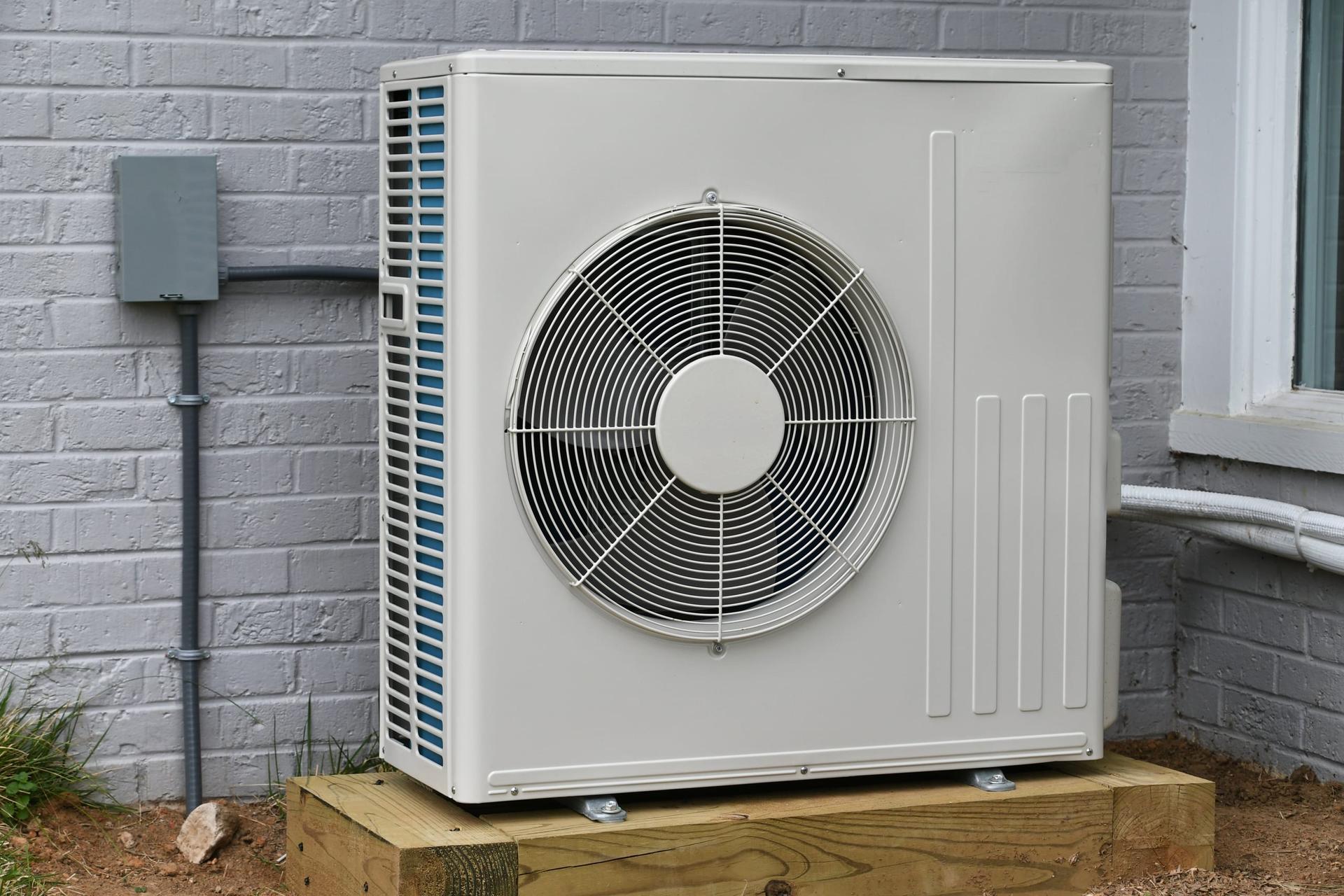
- No closer than one metre to any external condition that may facilitate climbing, such as a tree, woodpile or air conditioner. The exception: the enclosure is at least 1.8 metres high for one metre either side of it.
- Nothing attached between 100 millimetres and 1.2 metres above grade on the outside that may help someone climb.
- Non-climbable facing, installed on the outside of the enclosure, must run from no more than 50 millimetres above grade to the required minimum height. The only gap allowed at ground level is under a gate. Where a hard surface runs 500 millimetres each side of the gate, the clearance under it may be no more than 100 millimetres.
- "Non-climbable" means a 1.2-metre vertical face with nothing to grip. Chain-link mesh qualifies at no greater than 38 millimetres square for 1.2 metres vertically. Otherwise no horizontal opening or step over that height may be wider than 38 millimetres. Where horizontal components sit at least 1.2 metres apart, no opening may be greater than 100 millimetres. The same split covers wood boards, metal pickets and glass panels. Horizontal boards are stricter: no more than 20 millimetres apart.
- The side between pool and house must be open construction. It cannot block the view of the pool from a door or window on the main living area.
Do not fill the pool early
No person may fill a pool, or let water collect in it, until an officer has inspected and confirmed a finished permanent enclosure. Where temporary fencing is authorised you may fill it, but not use it. City staff cite the Lifesaving Society's 2016 Ontario Drowning Report. It puts about 11 per cent of Ontario drowning deaths from 2010 to 2014 in private pools, fifteen of them children under five.
Sharing a fence with a neighbour
Ontario has a process for boundary fences. Under the Line Fences Act an owner asks the municipality to appoint fence-viewers, local officials who rule on a shared fence. Three must attend the viewing. They split the cost and settle the design, and you get 15 days to appeal ($406.05 in 2026).
None of it is available in Toronto. Article 2 of Chapter 447 reads: "The Line Fences Act, except for section 20, does not apply to all of the City of Toronto." Section 20 is the part a council cannot opt out of. It covers fencing duties on former rail lines beside farmland. The City states the consequence. It does not accept applications for line fence viewing. And "the City does not have a role in resolving disputes about the location or costs of boundary fences between properties."
So agree in writing before anyone digs. Confirm the boundary with an up-to-date survey. If you deadlock, use the City's referral to TNG Community Services for free mediation.
Exemptions, notices and fines
For a fence the table does not allow, apply to Community Council for a site-specific exemption. It costs $200.00, non-refundable. Neighbours are notified, everyone within a 60 metre radius for a front-yard fence. You post notice on the property 10 days before the meeting.
No exemption hearings until 2027
Municipal Elections Act rules suspend Community Council meetings from August to December 2026, so nothing is decided until early 2027. Applications are still accepted and inspected, and filing one pauses enforcement. But you cannot use a pool until a compliant enclosure is in place or an exemption is granted.
Enforcement runs on complaints to 311. Section 447-1.4 sets a fine of not more than $100,000 on conviction. It adds a special fine equal to the fair market value of any economic advantage gained, and the same exposure for a company director who agrees to it. Every offence counts as continuing, so it also allows up to $10,000 a day, and the total may pass $100,000. In practice, fines have been far smaller. Staff's 2018 review found 73 per cent were $500 or less, in a range of $100 to $5,000, before the ceiling rose from $5,000 to $100,000.
Frequently asked questions
How high can my back fence be in Toronto?
2.0 metres between two residential back yards (Table 1 row 9). It reaches 2.5 metres only where the fence touches multi-residential or non-residential land, a public highway (a lane counts) or a walkway. And it must not be a driveway or deck fence.
Do I need a permit to build a fence in Toronto?
No. Pool enclosures are the only private fences that need permits. The claim that a front-yard fence over four feet needs one is false: there is no fence permit to get. A fence that breaks Table 1 is simply not allowed without a Community Council exemption.
How high can a fence be on a corner lot?
1.2 metres within 2.4 m of either street lot line in the front yard. On a corner lot it runs the full width of the lot, up to the main building's nearest wall, so the side-street strip counts. Behind that wall line, 2.5 metres.
My neighbour won't split the cost of the shared fence. What can the City do?
Nothing. The Line Fences Act, except section 20, does not apply in Toronto. So there are no fence-viewers, and the City takes no line-fence applications or boundary-fence disputes. Your options are agreement, the City's free mediation referral, or legal advice.
Sources (11)
- Toronto Municipal Code Chapter 447, Fences (June 9, 2021 consolidation) · City of Toronto (retrieved )
- Fences (Bylaw Enforcement) · City of Toronto (retrieved )
- Fence Exemption · City of Toronto (retrieved )
- Zoning Applicable Law Certificate for a Pool Fence Enclosure · City of Toronto (retrieved )
- Toronto Municipal Code Chapter 441, Fees and Charges, Appendix C (July 1, 2025) · City of Toronto (retrieved )
- Application Form: Pool Fence Enclosure Permit (17-0205, March 2021) · City of Toronto (retrieved )
- Frequently Asked Questions: Pool Fence Enclosure Permit Applications · City of Toronto (retrieved )
- Pool Fence Enclosures (Small Residential Project Guide) · City of Toronto (retrieved )
- Review of Municipal Code Chapter 447, Fences (staff report, Municipal Licensing and Standards) · City of Toronto (retrieved )
- Line Fences Act · Government of Ontario (retrieved )
- A Guide to the Line Fences Act, 2024 update · Ontario Ministry of Municipal Affairs and Housing (hosted by AMCTO) (retrieved )
How this guide was made
Checked on August 25, 2026 and re-verified against Chapter 447 on August 26, 2026. Every height, dimension and fee was read out of the source document itself: Toronto Municipal Code Chapter 447 (Fences) and Chapter 441 Appendix C (Fees and Charges, July 1, 2025) as PDFs, plus four toronto.ca service pages, the City's Pool Fence Enclosure Permit form and FAQ, Municipal Licensing and Standards' 2018 review of Chapter 447, the Ontario government's Line Fences Act page and the Ministry of Municipal Affairs and Housing's 2024 Guide to the Line Fences Act.