Key takeaways
- Of 17 GTA companies that sell ice dam removal online, 2 post a price: $400 to $1,200 a job at AUK Roofers, or $975 an hour with a two-hour minimum at The Roof Whisperer.
- The Roof Whisperer lists $975 an hour with a two-hour minimum, so a job billed at that rate costs at least $1,950 (975 x 2 = 1,950).
- None of the 17 prints an emergency surcharge in dollars, and none of the 3 that print any figure says whether HST is included.
- 3 of the 17 advertise a chemical melt, while shingle maker IKO says roofers should avoid chemicals because they may void its limited warranty.
- Natural Resources Canada's best prevention is sealing attic air leaks and insulating, and the Home Renovation Savings attic rebate pays half the after-tax cost, up to $1,250, for work done by November 30, 2026.
Ice dam removal in the GTA costs $400 to $1,200 a job at AUK Roofers, one of two companies that post a price, out of 17 we checked on September 28, 2026. The other firm lists an hourly rate: The Roof Whisperer prints $975 an hour with a two-hour minimum. A third company posts only a price for roof snow removal. The other 14 print no figure on the pages where they sell the service. None of the 17 prints an emergency surcharge in dollars, and none of the three that print any figure says whether HST is included.
What GTA companies charge to remove an ice dam
Each row is one line item from the company's own page, as printed.
| Item | Low | High | Unit |
|---|---|---|---|
| AUK Roofers: steam removal, small accessible single-eave dam | $400 | $400 | per job |
| AUK Roofers: steam removal, typical residential dam | $700 | $900 | per job |
| AUK Roofers: steam removal, large multi-eave dam or three-storey access | $1,000 | $1,200 | per job |
| AUK Roofers: tarp-and-secure when water is actively entering | $400 | $650 | added to removal |
| The Roof Whisperer: professional steam removal, two-hour minimum | $975 | $975 | per hour |
| The Roof Whisperer: one-storey house, starting at | $799 | $799 | per hour |
| The Roof Whisperer: two-storey house, starting at | $899 | $899 | starting price, unit not printed |
| The Roof Whisperer: three-storey house, starting at | $1,599 | $1,599 | starting price, unit not printed |
| Right Choice Roofing: roof snow removal, starting price | $500 | $500 | starting price |
How much of the roof is iced. AUK's price rises with the number of eaves and the height of the climb, from $400 for one small dam to $1,200.
Hourly or fixed. The Roof Whisperer lists an hourly rate. At $975 an hour with a two-hour minimum, a job billed at that rate costs at least $1,950 (975 x 2 = 1,950). The same table, headed "Average Costs", prints lower starting prices by storey without saying whether the minimum applies. Its FAQ on the same page says removal "costs just a few hundred dollars." Ask which number applies before anyone climbs. AUK says it gives a "Fixed quote before we start."
Water already coming in. AUK adds $400 to $650 to tarp and secure the roof if water is actively entering.
None of these pages says whether HST is in the price, so read every figure as printed. None of the 17 companies prints an emergency or after-hours surcharge in dollars either. Right Choice Roofing says emergency work right after a big storm "may carry a premium."
Most GTA companies won't put a price online
Here's what 17 GTA companies that sell the service publish on their own pages.
| Company | Where it works | Ice dam price posted | Method the page names |
|---|---|---|---|
| AUK Roofers | Toronto and 13 other GTA areas | Yes, $400 to $1,200 | Steam only |
| The Roof Whisperer | Toronto and the GTA | Yes, $975 an hour | Steam, or calcium chloride |
| Right Choice Roofing and Repair | Toronto | No (roof snow removal from $500) | Not named |
| Tip Top Trough | Vaughan, Toronto | No | Steam |
| D'Angelo & Sons | Mississauga, Burlington, Vaughan, Oakville | No | Steam |
| Tree Doctors | Toronto | No | Not named |
| Tactic Roofing | Brampton, Mississauga | No | Not named |
| Nailed It Roofing | Mississauga, Oakville, Milton | No | Not named |
| Integrity Roofers | North York | No | Not named |
| Best Roofer & Renovation | Toronto | No | Not named |
| Anjco Roofing | Newmarket, Richmond Hill | No | Not named |
| Roof Pro Plus | Newmarket, Georgina | No | Calcium chloride, then removes the ice |
| Luso Roofing | Toronto | No | Hot water or magnesium chloride |
| The HandyForce | Toronto | No | Steam |
| Restoration Mate | Toronto | No | Recommends steam |
| Above It All Roofing | Georgetown, Mississauga | No | Steam |
| E. W. Smith Roofing | North York | No | Steam |
Two of the 17 post an ice dam price. Right Choice posts only a roof snow removal price, with ice dam removal listed as a factor in it. The other 14 print no figure where they sell the service.
Seven of the 17 say they use steam. Three advertise a chemical melt. The Roof Whisperer offers calcium chloride as a second method. Roof Pro Plus treats the ice with calcium chloride, then removes the ice. Luso Roofing uses hot water or magnesium chloride. Seven don't say how they remove the ice.
Steam, hot water or chemicals: what the shingle maker says
Two of these firms call steam the only acceptable method. AUK says it's "the only method that won't damage your shingles or void manufacturer warranties." Tip Top Trough calls low-pressure steam "the only method endorsed by roofing manufacturers."
A shingle maker's own advice is broader. IKO, which makes asphalt shingles, lists hot water, run gently over the dam, as one safe way for a roofer to melt it. On chipping: "It is NOT a good idea to take a pick, shovel or another tool to the ice and chip it off." On chemicals: roofers "should avoid using any chemicals on your roof," because some can harm asphalt shingles and "their use may void the manufacturer's limited warranty."
Natural Resources Canada (NRCan) agrees on the first point. Attacking ice dams "every winter with an axe or ice pick will damage the roof surface."
Put together, the sources point to heat without force. Steam melts the ice without hitting the shingles, and IKO counts gently run hot water too. Two firms in the set warn about hot water done wrong. D'Angelo & Sons says "high-temperature water pressure" can "cause further damage to your cold roof." Restoration Mate warns that "pouring hot water on ice dams" can "crack shingles from thermal shock." If a quote mentions calcium chloride, magnesium chloride or ice melt, read your shingle warranty before you say yes.
Why ice dams form, in plain words
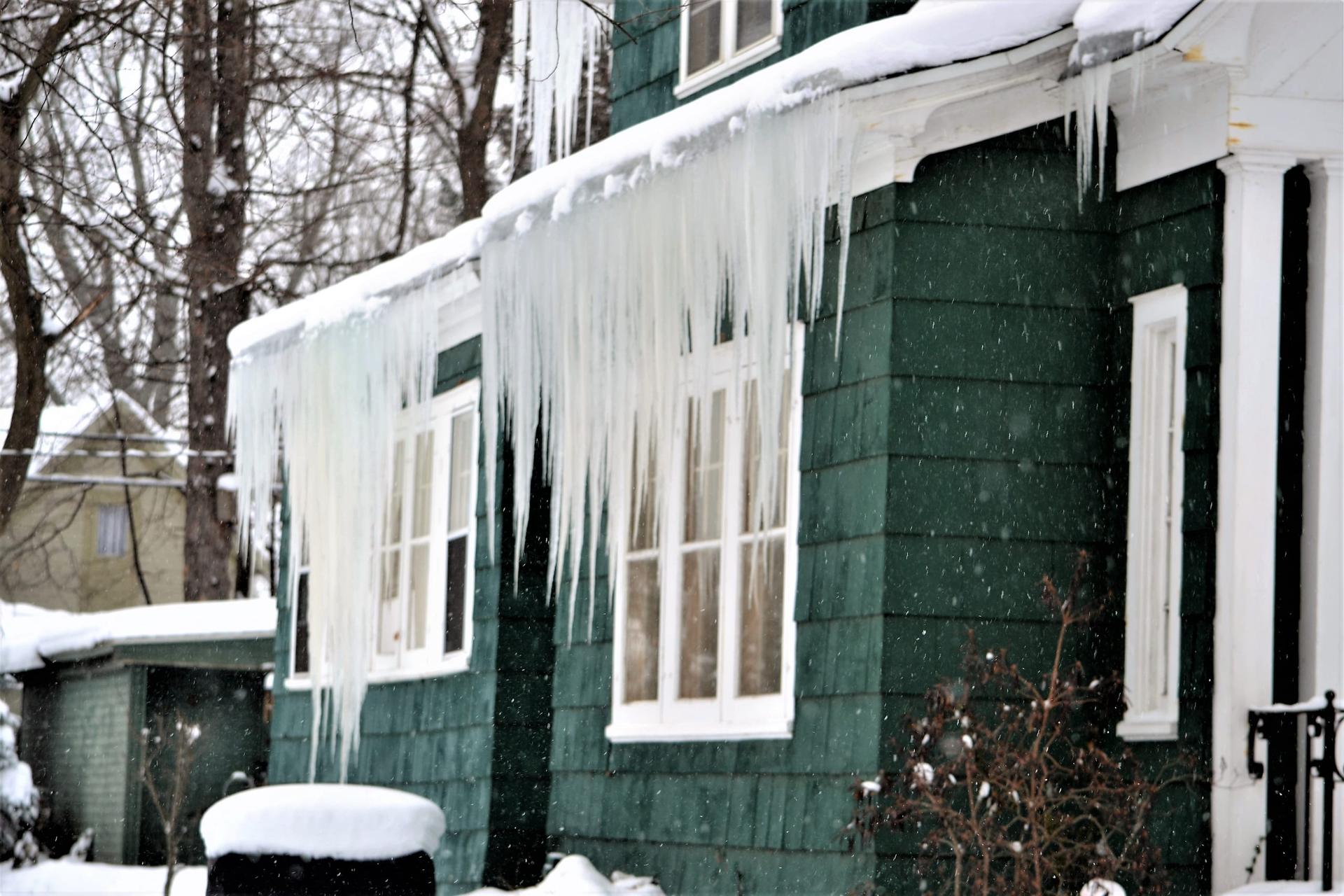
An ice dam is a ridge of ice along the bottom edge of the roof that stops melting snow from draining. When the attic is above freezing, it warms the roof boards from below and melts the snow touching them. The meltwater runs down to the overhang, which sits outside the heated house. "If the air and the overhang are below freezing," NRCan says, the water freezes there and starts the dam. Water that pools behind the ridge can back up under the shingles and leak into the attic.
The Insurance Bureau of Canada (IBC) lists three main causes: too little attic insulation, poor attic ventilation, and heavy snow with blocked eavestroughs. NRCan adds that roofs with many valleys, dormers or big overhangs are more prone, because they leak more heat.
The IBC's own prevention list starts with clearing eavestroughs of debris. But NRCan's fix goes to the attic: "The best prevention for ice damming is to seal all attic air leaks and insulate thoroughly." A well-sealed, insulated attic keeps the roof cool, and it "generally will also not have ice dams."
What prevention costs
Insulation, with a rebate that ends soon. The Home Renovation Savings attic stream is run by Enbridge Gas and Save on Energy. It pays 50 per cent of your total attic insulation cost after tax, up to $1,250. To qualify, you must own the home. Your heating decides the rest: either a natural gas furnace or boiler on an Enbridge Gas account, or electricity, oil, propane or wood on Ontario's electricity grid. Detached, semi-detached, row and town homes qualify, as do mobile homes on a permanent foundation. Stacked townhouses and homes occupied six months or less don't.
The top $1,250 needs an attic that starts at R-12 or less and reaches R-50. The whole roof assembly must be insulated, not just the problem eaves. R-value measures how well insulation slows heat, so a bigger number means a warmer ceiling. The program's own example is an attic job costing $1,400 after tax, which pays $700 (1,400 x 0.5 = 700). The $1,250 cap is reached at an after-tax bill of $2,500 (1,250 / 0.5 = 2,500). Only a contractor on the program's closed list can do the work, and it has to be finished by November 30, 2026.
Air sealing. This is the other half of NRCan's fix. It earns up to $250, but only through the program's assessment stream. The home must also hit an air-tightness target after the work: $250 for beating it by 10 per cent or more, $200 for meeting it. That route needs a home energy assessment first and at least two upgrades. It also pays up to $1,500 for the same R-12 or less to R-50 attic upgrade, but the program's rules bar a rebate from both streams for the same upgrade.
Heat cables. These are the quick fix. NRCan says electric heating cables "will melt channels in the ice, sometimes alleviating a problem, but they use a significant amount of electrical energy while being an eyesore on most roofs." Home Depot Canada sells a WarmlyYours 60 ft plug-in kit for $89.25, online only. Its Scarborough, Woodbridge, Oakville and Markham stores stock a Waterline 100 ft cable for $96.84 (prices checked September 28, 2026). Either costs less than one hour at the hourly firm. Neither is a removal tool. WarmlyYours says its kit is not meant to clear a dam that has already formed. Waterline, which makes the other, says on Home Depot's page that its cable is "not designed to always be on" for fire safety. It also says the cable is for sloped shingle roofs, not metal ones.
Safety: who should be up there, and what Toronto requires
NRCan puts it plainly: "removing ice dams and snow is not always easy or safe to do." Ontario's Ministry of Labour says a cubic foot of snow weighs from seven pounds when new and dry to 30 pounds when old and packed. Its workplace alert says workers on a roof "must have adequate fall protection." It also says people nearby "can be injured by snow being dumped from a roof."
Ladders are the other risk. The Public Health Agency of Canada's CHIRPP injury brief uses 2003 emergency records for people 15 and older. In it, a fall from a ladder was the top cause of home maintenance injuries: 23 of 102 cases.
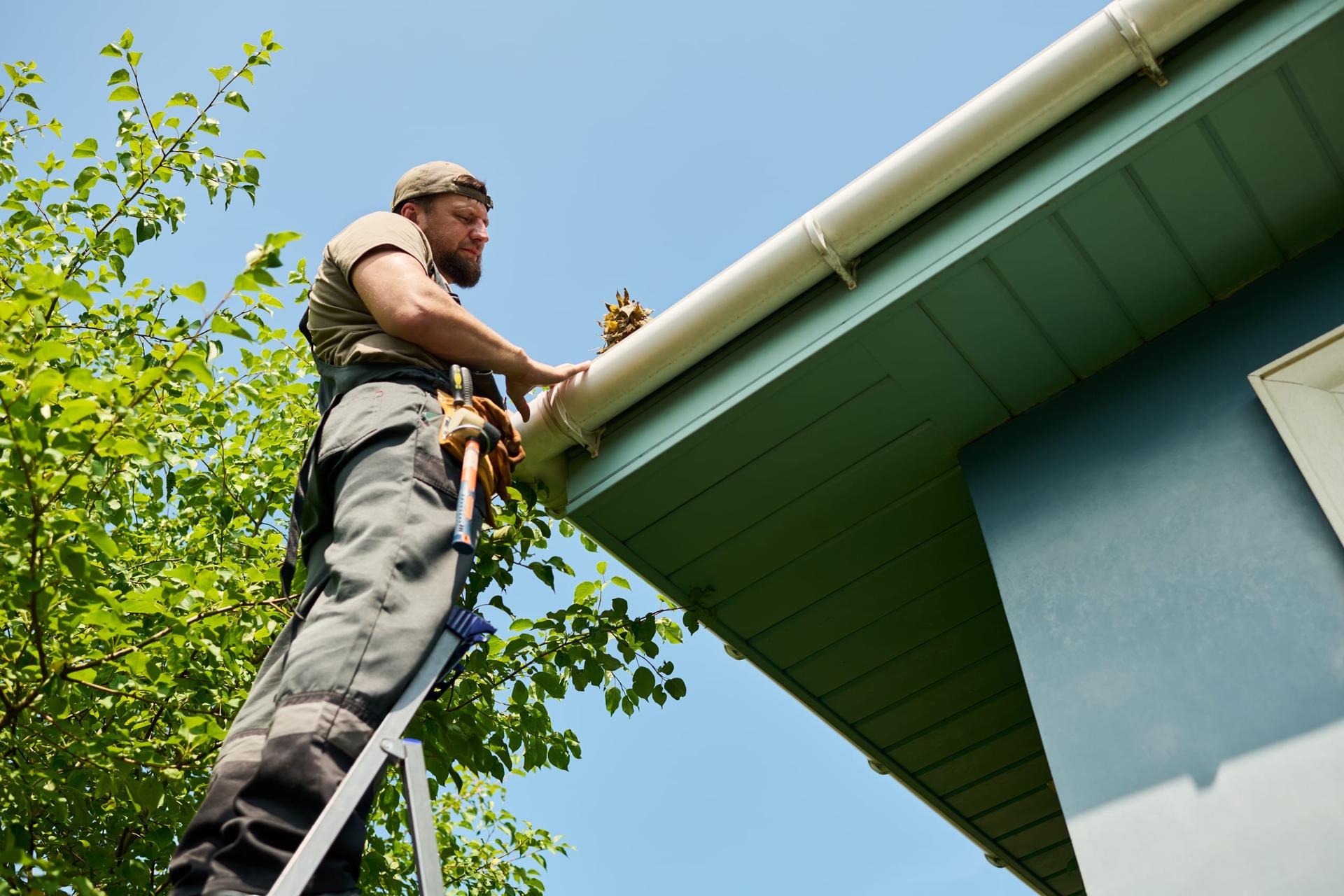
If you hire, ask two things. First, does the crew work tied off? The Infrastructure Health and Safety Association (IHSA) is clear on this. Roofers exposed to a fall of more than 3 metres "must be protected by a fall protection system" and trained to use it. It adds that sloped roofers in Ontario need working at heights training. Second, where will the ice land? The Ministry's alert says areas where snow will be dumped should be secured so no one can walk into them.
In Toronto, some of this is a legal duty. Municipal Code § 629-20 A says every roof must be free from "dangerous accumulation of ice and snow." Section 719-4 covers a building on or near a highway from which snow or ice may fall onto it. The chapter uses the Highway Traffic Act's meaning of highway, which covers a public street and the whole area between its property lines. If snow or ice builds up "to an extent that is dangerous to the public using the highway, sidewalk or lane way," the owner or occupant must have it removed immediately. They must also warn and protect the public while it comes down.
Will insurance pay for ice dam damage?
The IBC says standard home policies "commonly cover sudden and accidental water damage caused by ice dams." Damage that is "ongoing or repeated" is "considered a long-term maintenance issue and may not be covered." It also says basic policies might not cover damage from ice dams, and that many insurers sell water damage endorsements, which are add-ons to your policy. RBC Insurance says most Canadian insurers cover sudden or accidental water damage from ice damming. It adds that policies vary and that you're expected to maintain your roof and eavestroughs.
The removal bill is the open question. Neither the IBC nor RBC Insurance says whether the cost of steaming off the dam is covered, and two Toronto-area companies disagree. AUK says removal is "often reimbursable." Restoration Mate says "removing the ice itself is often treated as maintenance." Ask your insurer before you book. If water is already getting in, both the IBC and RBC say to call your insurer right away.
Get these in writing before you hire:
- The method: steam, hot water or a chemical.
- The price basis: a fixed price, or an hourly rate plus its minimum.
- Whether HST is included.
- Any emergency premium and any tarp charge.
- Photos of the roof, for your insurer.
Frequently asked questions
How much does ice dam removal cost in Toronto?
At the two GTA companies that post a price, as of September 28, 2026, AUK Roofers charges $400 to $1,200 a job. The Roof Whisperer lists $975 an hour with a two-hour minimum.
Can I remove ice dams myself?
NRCan says removing ice dams and snow "is not always easy or safe to do," and that an axe or ice pick will damage the roof. RBC Insurance suggests a roof rake for the snow at the roof's edge "if it's safe to do so," and a professional otherwise. IKO says ice dams "should always be removed by professionals who understand winter roof safety."
What is the best tool for removing ice dams?
Heat, not force. IKO lists hot water, run gently, as a safe method and warns against picks, shovels and chemicals. Seven of the 17 GTA companies we checked say they use steam, which also melts without striking the shingles.
Will insurance cover ice damming?
Often, when the damage is sudden. The IBC says standard policies commonly cover sudden and accidental water damage from ice dams, but repeated damage may count as a maintenance issue and not be covered. Neither the IBC nor RBC Insurance says whether removal itself is covered, so ask first.
What can I put on my roof to stop ice dams?
Heat cables melt channels through the ice. Home Depot Canada sells a 60 ft WarmlyYours plug-in kit for $89.25 online and a 100 ft Waterline cable for $96.84 at four of its GTA stores. NRCan says heating cables use "a significant amount of electrical energy" and prefers sealing attic air leaks and insulating. IKO says to keep chemicals off asphalt shingles.
When should you worry about ice dams on a roof?
The IBC says large icicles may mean an ice dam, though not always. Water stains on a ceiling or wall mean water is already getting in. In Toronto, Municipal Code § 629-20 A requires every roof to be free from a dangerous accumulation of ice and snow.
Should I cover my entire roof with an ice and water shield?
NRCan says building codes require this self-sealing membrane on the lower part of the roof in new houses. It doesn't stop ice dams. It stops the water behind them from leaking through the roof boards. IKO says the membrane is "often required by building codes." Neither NRCan nor IKO calls for covering the whole roof.
Sources (33)
- Ice Dam Removal Toronto: Safe Steam Removal, Same-Day · AUK Roofers (retrieved )
- Ice Dam Removal Services in Toronto and GTA · The Roof Whisperer (retrieved )
- Roof Snow and Ice dam removal Services in Toronto · Right Choice Roofing and Repair (retrieved )
- Ice Dam Removal Toronto & GTA · Tip Top Trough (retrieved )
- Roof Snow & Ice Dam Removal Services · D'Angelo & Sons (retrieved )
- Contact D'Angelo & Sons · D'Angelo & Sons (retrieved )
- Rooftop Ice Dam Removal in Toronto · Tree Doctors Inc. (retrieved )
- Roof Snow & Ice Dam Removal in Brampton & the GTA · Tactic Roofing (retrieved )
- Snow Removal & Ice Damming Services · Nailed It Roofing & Construction (retrieved )
- Toronto ice damming services · Integrity Roofers (retrieved )
- Ice Damming Removal Services Toronto · Best Roofer & Renovation (retrieved )
- Emergency Ice Dam Removal in the GTA · Anjco Roofing (retrieved )
- Ice Dam Roof Removal & Prevention · Roof Pro Plus (retrieved )
- Trusted Ice Dam Removal in Toronto & GTA · Luso Roofing (retrieved )
- Ice Dams in Toronto: Causes and Fixes · The HandyForce (retrieved )
- Ice Dam Removal Toronto: Causes, Prevention & Safe Removal · Restoration Mate (retrieved )
- Ice Dam Removal in Georgetown · Above It All Roofing (retrieved )
- Preventing and Removing Ice Dams on Your Roof · E. W. Smith Roofing (retrieved )
- Keeping The Heat In, Section 5: Roofs and attics · Natural Resources Canada (retrieved )
- Roof Ice Dam Removal · IKO (retrieved )
- Stay protected: Understanding and helping prevent ice dams · Insurance Bureau of Canada (retrieved )
- What Homeowners Need to Know About Ice Damming · RBC Insurance (retrieved )
- Toronto Municipal Code Chapter 629, Property Standards · City of Toronto (retrieved )
- Toronto Municipal Code Chapter 719, Snow and Ice Removal · City of Toronto (retrieved )
- Highway Traffic Act, R.S.O. 1990, c. H.8, s. 1 (1) definitions · King's Printer for Ontario (retrieved )
- Alert: Snow loading and roof failures · Ontario Ministry of Labour, Immigration, Training and Skills Development (retrieved )
- Fall protection for sloped roofers · Infrastructure Health & Safety Association (retrieved )
- CHIRPP Injury Brief: Home improvement-related injuries · Public Health Agency of Canada (retrieved )
- Home Renovation Savings: Seal in comfort with attic insulation · Enbridge Gas and Save on Energy (retrieved )
- Home Renovation Savings Program, Attic Program Stream: Additional Program Eligibility Requirements (version date January 2026) · Enbridge Gas and Save on Energy (retrieved )
- Home Renovation Savings: Energy assessment required upgrades · Enbridge Gas and Save on Energy (retrieved )
- WarmlyYours 60 Ft Roof and Gutter Deicing Cable Kit Plug_In 120V · The Home Depot Canada (retrieved )
- Waterline 100 ft. Roof & gutter de-icing cable · The Home Depot Canada (retrieved )
How this guide was made
Checked on September 28, 2026. Prices and removal methods come from the websites of 17 GTA companies that sell ice dam removal, one line item per table row. Causes and prevention come from Natural Resources Canada and shingle maker IKO. Safety facts come from Ontario's Ministry of Labour, the Infrastructure Health and Safety Association, the Public Health Agency of Canada and Toronto Municipal Code Chapters 629 and 719. Insurance wording comes from the Insurance Bureau of Canada and RBC Insurance, rebate terms from the Home Renovation Savings program's own documents, and retail kit prices from Home Depot Canada's store prices for its Scarborough, Woodbridge, Oakville and Markham stores. The meaning of highway comes from Ontario's Highway Traffic Act.