Key takeaways
- There is no single set of quiet hours. Construction is allowed 7 a.m. to 7 p.m. Monday to Friday and 9 a.m. to 7 p.m. on Saturdays, and not at all on Sundays or statutory holidays; leaf blowers and mowers get 8 a.m. to 7 p.m. on weekdays and 9 a.m. to 7 p.m. on Saturdays, Sundays and statutory holidays.
- Amplified sound and musical instruments are capped by decibels, not by curfew: a ten-minute Leq of 55 dB(A) or 70 dB(C) from 7 a.m. to 11 p.m. and 50 dB(A) or 65 dB(C) from 11 p.m. to 7 a.m., measured at an outdoor point of reception in a living area, seven days a week.
- A residential air conditioner is measured over a full hour, not ten minutes: 50 dB(A) from 7 a.m. to 11 p.m. and 45 dB(A) from 11 p.m. to 7 a.m. at an outdoor point of reception, and where the ambient level already beats that, the unit may not exceed the ambient.
- Set fines run $500 to $900 depending on which section you break, but a summons and conviction carries up to $100,000, plus up to $10,000 for each day the offence continues.
- Toronto's 311 open-data file records 16,861 noise service requests in calendar 2025, and the City states plainly that bylaw officers are not emergency responders and cannot stop a noise event on the spot.
Toronto has no single "quiet hours" rule. Chapter 591 sets a separate one for each kind of noise, and most change on Saturdays, Sundays and statutory holidays. Construction is tightest: nothing clearly audible 7 p.m. to 7 a.m. weekdays, nothing before 9 a.m. Saturdays, nothing at all Sundays and statutory holidays. Amplified sound and air conditioners have no curfew, only decibel limits that step down at 11 p.m. Set fines run $500 to $900. A conviction can reach $100,000.
Which version is in force
The consolidation on the City's site is dated November 14, 2024, the date of By-law 1231-2024, the grassroots-organization fee waiver. By-law 878-2019 replaced the chapter outright on October 1, 2019. By-law 268-2024 then rewrote it.
Be careful with 268-2024's dates. Its stamps run through the chapter. Only two carry an editor's note putting them in force September 1, 2024: both permit machinery, the Exemption Permit Screening Criteria definition and § 591-3.2. No Article 2 prohibition carries one. § 591-4.5C, added by 268-2024 itself, treats June 1, 2024 as the changeover, finishing prosecutions begun "between October 1, 2019, and May 31, 2024" under the old text. By-law 288-2024, deemed in force that same June 1, set the exhaust limits. Everything here comes from that consolidation, checked against the City's noise page, modified July 2026.
The quiet hours, by type of noise
Noise class | Weekdays | Saturday | Sunday and statutory holidays |
|---|---|---|---|
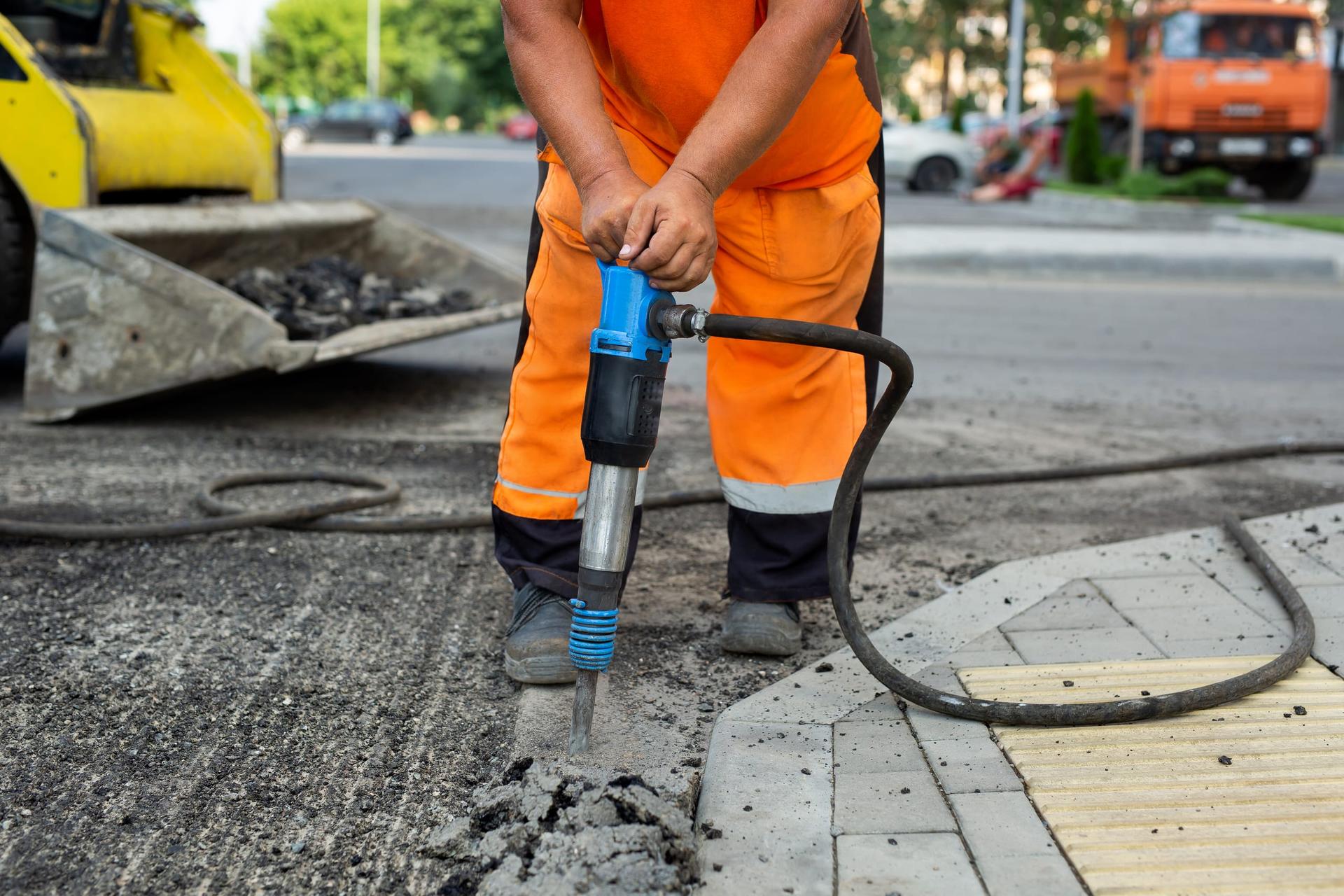
Construction (§ 591-2.3) | Allowed 7 a.m.–7 p.m. | Allowed 9 a.m.–7 p.m. | Not allowed at all |
Power devices (§ 591-2.6A): equipment driven otherwise than by muscular power, used in the "servicing, maintenance or repair of property or lawns": mowers, leaf blowers, chainsaws, trimmers, pressure washers. A power device expressly does not include construction equipment as defined in the chapter, or equipment used to remove snow or ice: the same saw on a deck rebuild is construction, and takes the construction hours. § 591-2.6B also exempts golf-course, public-park and City operations, including work the City contracts out | Allowed 8 a.m.–7 p.m. | Allowed 9 a.m.–7 p.m. | Allowed 9 a.m.–7 p.m. |
Loading, unloading, deliveries (§ 591-2.4A): deliveries to retail businesses, restaurants, cafes, bars, hotels, motels and goods-distribution facilities are excepted under § 591-2.4B, "except as otherwise authorized by a regulation made under" s. 115.1 of the City of Toronto Act, 2006 | Not allowed 11 p.m.–7 a.m. | Not allowed 11 p.m.–9 a.m. | Not allowed 11 p.m.–9 a.m. |
Repairing, rebuilding, modifying or testing a vehicle (§ 591-2.5B) | Not allowed 9 p.m.–7 a.m. | Not allowed 9 p.m.–9 a.m. | Not allowed 9 p.m.–9 a.m. |
Amplified sound and musical instruments (§ 591-2.1) | Decibel limit, stricter 11 p.m.–7 a.m. | Same | Same |
Stationary sources and residential air conditioners (§ 591-2.8) | Decibel limit, stricter 11 p.m.–7 a.m. | Same | Same |
Animals (§ 591-2.2): any animal kept for any purpose; "persistent" means heard or felt continuously for ten minutes or more, or intermittently for a total of ten minutes within one hour | Persistent noise banned at any hour | Same | Same |
Anything else unreasonable and persistent (§ 591-2.9): "unreasonable noise" excludes "commonplace household or workplace sounds such as sound from furniture being moved, children playing or people engaging in conversation"; "persistent" means heard or felt continuously for ten minutes or more, or intermittently for a total of ten minutes within one hour | Banned at any hour | Same | Same |
A Monday statutory holiday swaps the weekday rule for the weekend one. Where a sound falls under two sections, § 591-2.10 says the most restrictive applies.
Construction: hours, not decibels
Section 591-2.3 bans construction sound "clearly audible" during the banned hours. There is no decibel test. If you can hear it, it counts, so a 6:40 a.m. complaint needs no meter. The definition runs from demolition and excavation to concrete work and equipment installation, "and includes any work in connection with these activities".
The way around them is a noise exemption permit, filed at least 28 calendar days ahead and screened into Level 1, 2 or 3. Processing runs three to four weeks. The permit sets the hours, and the by-law caps nothing. A general permit caps sound at a ten-minute Leq of 85 dB(A) or 105 dB(C). Leq is the average level over the stated period. It is taken at the lot line for amplified sound, and 20 metres from the source otherwise (§ 591-3.2D(4)). Continuous concrete pours and large crane work run under § 591-3.2F. It applies only the conditions in D(1), (2) and (7), so that cap does not bind them.
Monitoring is a band ("$85.45 to $111.40 per staff per hour" plus tax), and an event "may require more than one officer". Do not quote these off the Code alone. Chapter 441, Appendix C, Schedule 12 is dated July 1, 2025. Its modern noise block (refs 504–511) is marked "Annual Adj: Yes". Under § 441-4A that puts those fees on an annual escalator: $114.40 × 1.04 = $118.98. A "No" is not a freeze. It is the absence of that instruction, and Council still moves such a fee by amending the appendix.
Two noise lines carry "No", an orphaned older pair. Ref 60 is the officer's base monitoring rate, missing from the modern block, which carries only the overtime rate. It shows $79.00 where the City charges $85.45, a gap of $85.45 − $79.00 = $6.45. Ref 59, the appeal fee, sits at $405.00, while the appendix's four other per-appeal fees ($348.70 twice, $402.37, $1,025.01) are all "Yes". So treat $405.00 as Appendix C's July 2025 figure, not a confirmed price. The permit page publishes no amount, only "An appeal fee must also be paid". Check it with the City Clerk before filing. § 591-3.2E gives 21 days from the notice. Notice of hearing goes to every resident within 100 metres "at the applicant's expense". Relief differs too. § 591-3.2G(2) makes the Chapter 441 fees inapplicable to the City "or any of its agencies, boards or commissions". G.1 spares a not-for-profit or grassroots cultural organization only "the associated exemption permit application fee", so monitoring and late fees still land.
Decibel limits and conditions
A decibel figure means nothing without its measurement condition: where the reading is taken, over what period, and against what baseline.
Amplified sound and instrument sound (§ 591-2.1) is taken at an outdoor point of reception in a living area, as an Leq over ten minutes. That is a spot on nearby land where someone would normally be. The limits are 55 dB(A) or 70 dB(C) from 7 a.m. to 11 p.m., 50 dB(A) or 65 dB(C) from 11 p.m. to 7 a.m., seven days a week. Indoors, where an outdoor reading is not reasonable, 50 or 65 by day, 42 or 57 at night. Where ambient noise (the background level) beats the limit, A(2) swaps the test: the source may not be "equal to or exceeding" the ambient.
Stationary sources (§ 591-2.8A and B) are generators and fans. They are measured as an Leq over one hour outdoors at a point of reception in a living area: 50 dB(A) from 7 a.m. to 11 p.m., 45 dB(A) from 11 p.m. to 7 a.m., or "the sound level limit prescribed in provincial noise pollution control guidelines, if applicable", which can be lower. Indoors, 45 and 40, same alternative. No ambient clause here. Subsection C lifts A and B, and only A and B, off a source with a provincial Environmental Compliance Approval. It does the same for one on the Environmental Activity and Sector Registry.
Residential air conditioners (§ 591-2.8D and E) get the same one-hour Leq numbers: 50 dB(A) by day, 45 dB(A) from 11 p.m. to 7 a.m. outdoors; 45 and 40 indoors. Here there is an ambient clause, a notch looser. Under D(2), where ambient beats the D(1) limit, the unit may not run at a level exceeding the ambient, not "equal to or exceeding".
Stationary motor vehicles (§ 591-2.5C): 92 dB(A) at idle, 96 dB(A) above idle, at least 50 cm from the exhaust outlet.
Construction, power devices and animals carry no decibel limit.
What is exempt outright
Section 591-3.1 makes five categories lawful at any hour or level: public-safety bells and sirens; emergency measures for health, safety or welfare; emergency highway work; government work; and waste collection. Government work covers construction and upkeep by the City, Ontario or Canada and their agents. Traffic, aircraft, watercraft and trains fall outside the by-law. Officers also do not respond to demonstrations, noisy parties or disorderly behaviour. Those go to Toronto Police at 416-808-2222, or 911.
How to report it
Two City steps come before 311. First, weigh whether the noise is reasonable for a dense city. Then speak to whoever is making it, and failing that, to "your landlord, condominium corporation, company or other entity that has the authority to resolve your noise concerns". Its contact table sends a neighbour "continually making noise" there, or to a mediator, before bylaw enforcement. Free mediation runs through a City partner. The row that does reach enforcement is the other one: "persistent and unreasonable noise", in the ten-minute sense.
If that fails, call 311 or 416-392-2489, or file online. Two things move a file.
- As many specific details as possible. The City asks for "its time and location, as well as the type of equipment being used (if possible)". That wording is for power-device reports it will not look into, but any file needs it, plus the address. An animal complaint needs the address where the animal lives. Your name is not shared with the owner.
- Contact details, and an email address if possible. Staff call for more before investigating.
What actually happens next
Manage your expectations, because the City does. Officers "are not emergency responders… and do not have the authority to immediately stop a noise event". They may not look into a one-off complaint at all.
The Noise Team's standard is a first contact, not a fix. It is 24 hours for Priority 1 (continual, neighbourhood-scale), 5 days for Priority 2 (recurring, such as early-morning construction), 7 days for Priority 3 (a party next door). The 311 Service Standard Dashboard for Q3–Q4 2025 says 10 days for Priority 3. Take the ML&S figures. The dashboard's three noise entries list only Priority 2 and 3 and end by pointing at that page, four months newer. Either way, the division adds there is "no set time frame within which service requests are resolved".
A barking dog runs on a different track. Animal noise goes to Toronto Animal Services, not the Noise Team. ML&S lists it among non-urgent animal requests at five business days, and the animal page warns it "may take up to five business days for the Officer to begin their investigation". Its route is four steps. Teach the owner the rules. Then an on-site visit, letter or Notice of Violation. Then a Noise Log proving the ten-minute test, "needed to satisfy the court by demonstrating that noise is… persistent and excessive". Then a charge before a Justice of the Peace, where "if you are unable to attend, the charges will be withdrawn". None of that chain is on the general noise page, which promises only a possible "witness statement and… evidence in court".
The penalties
Those are set fines, not the amount payable. A Chapter 591 ticket is a Part I offence notice under the Provincial Offences Act, so court costs and the provincial victim fine surcharge go on top. Expect two numbers on the notice; pay the total it states. Section 591-4.1 stacks four higher ones. No more than $100,000 on conviction. A continuing offence charge up to $10,000 for each day or part of a day it goes on, the daily total "may exceed $100,000". A special fine equal to the fair market value of the economic advantage gained. And personal liability up to $100,000 for each director or officer who concurred in a corporation's offence. An officer can also serve an Order to Comply and do the work at your expense.
What the complaint data shows
The City's 311 open data for 2025 carries 16,861 noise service requests across all ten request types.
311 noise request type, calendar 2025 | Service requests |
|---|---|
Construction noise | 3,780 |
Amplified or musical instrument noise | 3,184 |
Moving motor vehicle noise | 2,802 |
Unreasonable and persistent noise | 2,378 |
Animal noise | 2,222 |
Stationary source and residential air conditioner noise | 927 |
Permitted or exempted noise | 550 |
Stationary motor vehicle noise | 454 |
Power device noise | 383 |
Loading and unloading noise | 181 |
Total | 16,861 |
Treat these as a floor. The file covers only requests whose location the City could validate, a subset of all 311 contacts. Two lines were never going to put an officer at anyone's door: moving-vehicle noise, one in six of the total, and "permitted or exempted". The City logs both, and power-device noise inside permitted hours, but looks into none of them.
Waste collection is the one place the City reports its own follow-up. Council approved a complaints process in November 2024 and staff promised quarterly updates. As of July 2026 the table shows one quarter, Q1 2025: 17 received, 17 actioned, 8 resolved.
A permit does not silence the by-law
An exemption permit lifts only the prohibition it names, on the dates and times written into it. Every other section still applies. Notice goes up where the noise happens, seven days beforehand. That condition "may be altered or waived by the Executive Director". The Director may allow online posting only where the applicant "is unable to post a notice … at the physical location". A permit may also be revoked with or without notice "if there is non-compliance any of the exemption permit's conditions". Failing to comply carries a $900 set fine.
Frequently asked questions
I live in a condo or apartment. Who do I call about my neighbour?
Your condo corporation or landlord. The City routes a neighbour "continually making noise" there, and its test is whoever "has the authority to resolve your noise concerns". For a tenant that is the landlord, not you.
Is there a decibel limit on a neighbour's air conditioner?
Yes: a one-hour Leq of 50 dB(A) from 7 a.m. to 11 p.m., 45 dB(A) from 11 p.m. to 7 a.m., at an outdoor point of reception in a living area; 45 and 40 indoors. Where ambient beats that, § 591-2.8D(2) bars exceeding the ambient instead.
My neighbour's dog barks all day. How long will this take?
Longer than a noise complaint. It goes to Toronto Animal Services on a five-business-day standard, and you may be asked to keep a Noise Log and attend court. If you cannot, the charge is withdrawn.
Sources (11)
- Toronto Municipal Code Chapter 591, Noise (consolidation dated November 14, 2024) · City of Toronto (retrieved )
- Noise (Bylaw Enforcement) · City of Toronto (retrieved )
- Noise Exemption Permits · City of Toronto (retrieved )
- Toronto Municipal Code Chapter 441, Fees and Charges, Appendix C, Schedule 12 (July 1, 2025) · City of Toronto (retrieved )
- Toronto Municipal Code Chapter 441, Fees and Charges (May 22, 2025), § 441-4 Annual adjustment · City of Toronto (retrieved )
- Municipal Licensing & Standards: Customer Service Standards · City of Toronto (retrieved )
- Animals & Pets: Enforcement & Assistance (Reporting a Noisy Animal) · City of Toronto (retrieved )
- Sustainable Landscaping (Rules for Outdoor Power Equipment) · City of Toronto (retrieved )
- 311 Service Standard Dashboard, 2025 Q3–Q4 · City of Toronto, Customer Experience Division (retrieved )
- 311 Service Requests: Customer Initiated (dataset) · City of Toronto Open Data (retrieved )
- Create a Service Request · 311 Toronto (retrieved )
How this guide was made
Checked on August 26, 2026 against the text of Toronto Municipal Code Chapter 591 itself (the consolidation dated November 14, 2024, read out of the City's own PDF rather than any summary of it), plus Chapter 441 § 441-4 and its Appendix C, Schedule 12 for the fee lines, five toronto.ca service pages (noise, noise exemption permits, ML&S customer service standards, animal enforcement and outdoor power equipment), the 311 Service Standard Dashboard for Q3–Q4 2025, and the City's own 311 open data, from which the 2025 complaint counts in this article were tallied directly.