Key takeaways
- The minimum building permit fee for any work in Toronto is $214.79 in 2026, and permit fees are calculated as a service index rate multiplied by the floor area of the work.
- An uncovered deck no more than 60 cm above grade, a shed under 15 square metres, replacing a window in an existing opening in a house, and re-roofing with no structural work all need no building permit, but zoning still applies.
- A Zoning Applicable Law Certificate is not compulsory and not additive: it makes an application complete so the review clock runs, and 363-4.2C credits its fee against the building permit fee, though where it exceeds that fee the difference is not refunded.
- Complete house applications are reviewed within 10 business days, small buildings 15, large 20 and complex 30; Express Services targets 3 business days.
- Starting work first triggers a surcharge of 50 per cent of the permit fee or $214.79, whichever is greater, up to $29,456.99 per permit, and the homeowner pays it even if a contractor said no permit was needed.
Usually, yes. The Building Code Act requires a permit to build or demolish a building, add to one, or materially alter any building or structure. That catches almost every renovation that touches structure, plumbing or heating. The minimum fee is $214.79 in 2026. Above that, most fees are a rate per square metre of the work. A complete house application is reviewed in 10 business days, and "complete" has a strict meaning here. Start work first and the City adds 50 per cent of the permit fee, up to $29,456.99.
What needs a permit, and what does not
Neither City list covers every case. From When Do I Need a Building Permit?:
- A new building or any addition, and any structural or material alteration, work that changes how the building holds itself up: adding or removing walls, cutting or enlarging an opening, enclosing an existing deck, porch or patio of any size.
- A shed of 15 square metres (161 square feet) or more, or any accessory structure over 10 square metres (107 square feet). An accessory structure is a separate building on the lot, like a garage or a gazebo. If it is attached to the house or has plumbing in it, size stops mattering.
- Finishing a basement with structural alterations, new or changed heating or plumbing, digging out, underpinning (rebuilding the footings under a wall), a basement entrance or a second suite.
- A deck more than 60 centimetres (24 inches) above ground; a retaining wall over one metre high where the public can reach it; demolition of any part of a building; a chimney, fireplace or wood stove; heating or plumbing work; a change of use even with no construction.
What is exempt
These need no permit. But the City's warning here is the stronger point: this list "is not exhaustive and judgment should be used depending on the situation and circumstances associated with the project. Even if a building permit is not required, compliance with the Zoning Bylaw is required."
- An uncovered deck not more than 60 cm above the adjacent grade, unless it is part of a required exit. Grade is the ground right beside the deck.
- Replacing a window or door in an existing opening in a detached, semi-detached or single-unit row house. The opening cannot be moved or resized, the structural support for it is not altered or affected, and no new exit is created.
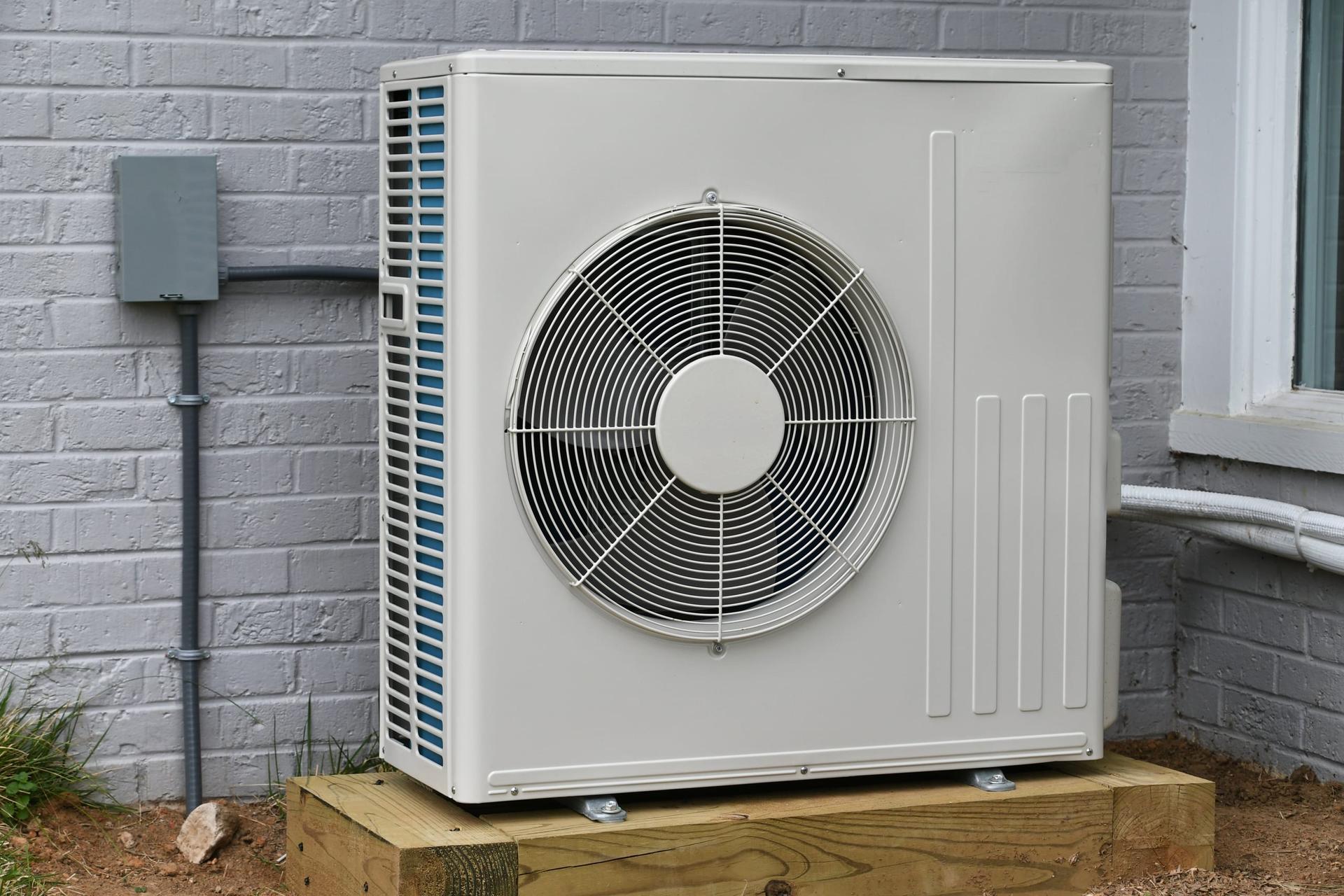
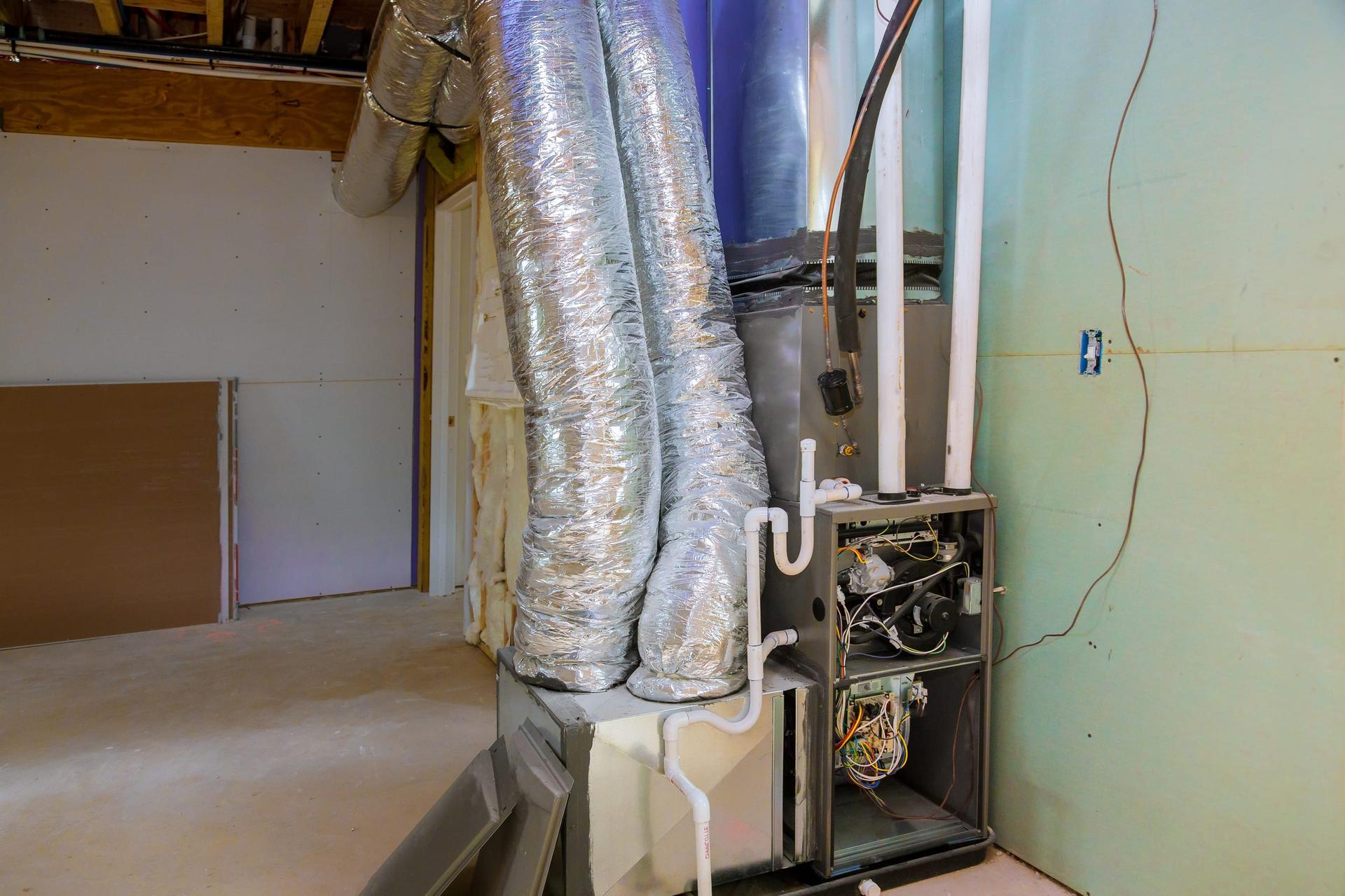
- Replacing a furnace or boiler in a house, or adding cooling, a gas fireplace or a hot water tank; replacing roofing material with no structural work; re-cladding with non-combustible material other than brick or stone; finishing a basement with no structural alterations, no new dwelling unit and no new plumbing.
- A shed of 15 square metres or less, detached, storage-only, with no plumbing.
At exactly 15 square metres the City contradicts itself. The list of work that needs a permit says "or more", while the exemption says "not more than 15 m2". If you are right on the line, ask Toronto Building.
What a Toronto building permit costs in 2026
Use the City's Building Permit Fees page, effective January 1, 2026. Skip the by-law: its consolidation (Chapter 441, Appendix C, Schedule 8) is dated July 1, 2025 and still carries 2025 amounts. Under § 363-4.3B the sum is permit fee = SI × A, which is the service index rate for that work times its floor area. A minimum of $214.79 applies to all work. Examination and inspection beyond five hours costs $92.79 an hour.
| Item | Low | High | Unit |
|---|---|---|---|
| Minimum fee, any work | $214.79 | $214.79 | per permit |
| New house, semi, townhouse or duplex | $18.56 | $18.56 | per square metre |
| Each new residential unit | $56.33 | $56.33 | per unit |
| Interior alterations, Group C, E and F | $11.53 | $11.53 | per square metre |
| Basement finishing, dwellings and townhouses | $6.20 | $6.20 | per square metre |
| Residential deck, porch or carport | $214.79 | $214.79 | flat fee |
| Detached garage or accessory structure | $214.79 | $214.79 | flat fee |
| Re-roofing or re-cladding, no structural work | $0.76 | $0.76 | per square metre |
| Demolition, all buildings | $0.18 | $0.18 | per square metre |
| Stand-alone boiler or furnace replacement, house | $214.79 | $214.79 | flat fee |
| Stand-alone HVAC alteration, boiler, furnace or A/C | $386.62 | $386.62 | flat fee |
| Stand-alone plumbing fixture, single family dwelling | $23.20 | $23.20 | each |
The rows marked stand-alone are permits for "work which is not related to other construction proposed for a building". Stand-alone means the plumbing or heating job is the whole project. If your renovation already needs a permit, plumbing and HVAC ride along with it. The related-permit pages say "No additional fee if submitted with building application", and the HVAC one adds "unless there is a specialty system". Site Servicing outside the building still costs.
Even there, the two furnace rows differ, and both sit oddly against the exemption list. A boiler or furnace replacement in a house is $214.79. The same swap booked as an HVAC alteration is $386.62. And the exemption page says it needs no permit at all. All three are live on toronto.ca, so confirm yours with the City.
At the minimum fee, cancelling gets nothing back
§ 363-4.11E(6) says a refund "less than the minimum fee applicable to the work" is not paid at all. On a $214.79 permit, 75 per cent is $214.79 × 0.75 = $161.09, below the minimum, so nothing comes back. The 75 per cent refund only pays out at or above $286.39 in fees ($286.39 × 0.75 = $214.79). Decks, porches, garages, sheds and a furnace swap at the $214.79 stand-alone rate all sit at that minimum.
The Zoning Applicable Law Certificate, and the credit that cancels it
A Zoning Applicable Law Certificate (ZAP) is a separate review. It confirms your plans meet the zoning rules and the other laws for the site. It costs $214.79 for ancillary residential structures such as a deck or a garage. For a house, or an alteration to one, it is $644.38. Larger non-residential buildings cost more.
It is not added on top of the permit. Municipal Code § 363-4.2C says the ZAP fee "will be credited to the building permit application such that the building permit fees will be reduced by the amount of the Zoning Applicable Law Certificate fee." So you pay it once. Where the ZAP fee is bigger than the permit fees, § 363-4.2D credits it "for the total amount of the building permit fees, and there shall be no refund for the difference".
Nor do you have to get one. § 363-3.3B allows an application filed without one, and Express Services asks only for the form, the full permit fee and the drawings named in the Application Guide. What the certificate buys is completeness. With one, § 363-3.2A starts the review clock on the filing date. Without one, § 363-3.2B treats the application as incomplete, and those review periods do not apply.
Three examples, one of which I cannot finish
A 150-square-metre new detached house. 150 × $18.56 = $2,784, plus the $56.33 fee for the residential unit = $2,840.33. A $644.38 ZAP comes off the top, leaving $2,840.33 − $644.38 = $2,195.95 to pay when the permit is issued, before development charges.
A 60-square-metre basement finish. The permit fee is 60 × $6.20 = $372, less than the $644.38 house-rate ZAP. So § 363-4.2D caps the credit at the permit fee, and the $644.38 − $372 = $272.38 difference is not refunded. You pay $644.38 and nothing further, because D credits the ZAP "for the total amount of the building permit fees". That is the question C leaves open on the deck below. Plumbing applied for after the building permit submission adds nothing.
A raised deck. The permit is a flat $214.79, which is also the minimum fee, and an ancillary-structure ZAP is $214.79. § 363-4.2C reduces the permit fee by the ZAP fee. But § 363-4.3C says total permit fees "shall not be less than the minimum fee". No City page I could find says which rule wins when the two are equal, so I am not publishing a total. Ask Toronto Building. Through Express Services, where no ZAP is needed, it is $214.79.
The deposit rule people quote out of context applies only to applications filed without a ZAP. § 363-3.3B(2) asks for the preliminary fee estimate. Above $20,000, it asks for the greater of $20,000 or 60 per cent of the estimated full fees.
How long it actually takes
Toronto Building runs three review streams outside Express Services. Every turnaround below applies only to a complete application.
Stream | Scope | Review target |
|---|---|---|
Express Services | Decks, porches, detached garages, sheds, interior alterations, basement walkouts, stand-alone plumbing, solar panels. Excludes additions, laneway and garden suites, and anything needing Heritage Approval | 3 business days |
House Stream | Detached, semi-detached or row house with no more than two units, plus garden and laneway suites | 10 business days |
Small Building Stream | Part 9 buildings other than houses | 15 business days |
Large & Complex Building Stream | Part 3 buildings | 20 business days (large), 30 (complex) |
Why applications get sent back
Applications rarely get refused. They come back as an Examiner's Notice. Under § 363-3.2B, one filed without a ZAP, or with drawings that do not match the approved ZAP drawings, counts as incomplete, and the review periods do not apply. The ZAP is also where designs get turned down. The Chief Building Official issues either the certificate or a written notice that sets out the missing information, the zoning rules the plans break, and any other law they do not meet.
Three rules in Chapter 363 set the pace of that loop:
- A ZAP application includes a maximum of three reviews: the first plus two free re-examinations. After three without a certificate, you file and pay again.
- A certificate can only be filed with a permit application made within one year of issue.
- An application left inactive or incomplete for six months can be treated as abandoned without notice (§ 363-3.12). The status tool shows Cancellation Pending after five quiet months. A registered-mail notice follows, and the application is cancelled if nobody replies within a month.
- Building-permit resubmissions are not free the way the ZAP re-examinations are. § 363-4.3D charges the extra review time, "measured to the nearest whole hour", at the hourly rate on top of the permit fee. The fee page prices that as "the greater of $214.79/permit or $92.79/hour".
If the design breaks the zoning rules, change it or take it to the Committee of Adjustment, the panel that can grant a small exception (a minor variance). That costs $2,228.98 in 2026 for additions and alterations to a dwelling of three units or less. It is decided at a public hearing, after notice goes to owners within 60 metres.
Permits can also be revoked. Under § 363-3.15C the Chief Building Official shall serve a notice of intention to revoke, with the date and the reasons. Where it relies on section 8(10)(b), D(1) revokes the permit if no inspection is asked for by that date. D(3) revokes it if an inspection leaves the Chief Building Official unsatisfied that the work has been "seriously commenced". § 363-3.15E covers 8(10)(c), where the test is "seriously resumed" and E(1) only says the official "may revoke".
What happens if you build without one
The surcharge. The "work without permit" fee is an extra 50 per cent of the permit fees, or $214.79, whichever is greater, up to a maximum of $29,456.99 per permit. Work stops in the meantime, and the normal timeline and fees still apply.
The zoning bill doubles. Where an Order to Comply (Work No Permit) has been issued on the land, the Committee of Adjustment adds an After the Fact Fee. The $2,228.98 minor variance becomes $2,228.98 × 2 = $4,457.96.
The order, then the ticket. A ticket under section 8(1) carries a $295.00 set fine, $300.00 with court costs, and $360.00 total payable. But the Auditor General's 2023 audit counted only 97 tickets issued in 2016–2020, against roughly 40,700 orders since 1989.
Prosecution is the real risk. The audit cites sections 36(3) and (4) of the Building Code Act. A person convicted can be fined up to $50,000 for a first offence and $100,000 for a later one. For a corporation it is $500,000 and $1,500,000. Those are worst-case maximums, management told the auditors. A justice of the peace sets the actual fine. The audit records $58,985 in penalty fees collected in 2021 and notes that "court time to prosecute charges was affected by the COVID-19 pandemic".
Open permits follow the property. An open permit is one that was issued but never signed off. The City is blunt: "Open permits may impede future real estate transactions and/or complicate future applications for building permits." The public status site carries only active permits applied for in the last 10 years, plus those closed or cancelled in the last month. Plenty will not show there. Before a sale, the fuller document is a Property Information Report at $214.79, in roughly five business days. And you pay as the owner, even if a contractor assured you no permit was needed.
Frequently asked questions
Do I need a permit for a deck in Toronto?
Only if the finished deck level is more than 60 centimetres (24 inches) above the ground beside it, or it forms part of a required exit. Below that, no permit is needed, but the Zoning Bylaw still applies.
How long does a building permit take in Toronto?
A complete house application is reviewed within 10 business days, a small building 15, a large 20, a complex one 30. Express Services targets 3 business days, but no clock starts until the application is complete.
Can I get my permit fee back if I cancel?
Rarely, on the permits this article is about. § 363-4.11E gives 75 per cent back before any review, 50 per cent after review began but before the permit is issued, and 40 per cent of the required permit fees if a permit was issued and then revoked, less the minimum fee for each field inspection. E(6) then cancels any refund that falls below the minimum fee. A Zoning Applicable Law Certificate has its own rule in § 363-4.11F: 75 per cent before review, nothing after, and F(3) applies the same floor.
Sources (18)
- Building Permit Fees (fees effective January 1, 2026) · City of Toronto (retrieved )
- When Do I Need a Building Permit? · City of Toronto (retrieved )
- Building Permit Review Streams · City of Toronto (retrieved )
- Zoning Applicable Law Certificate · City of Toronto (retrieved )
- Express Building Permits · City of Toronto (retrieved )
- Building Permit Application Pre-Check · City of Toronto (retrieved )
- Working Without a Permit · City of Toronto (retrieved )
- Toronto Municipal Code Chapter 363, Building Construction and Demolition · City of Toronto (retrieved )
- Toronto Municipal Code Chapter 441, Fees and Charges, Appendix C (Schedule 8, Toronto Building) · City of Toronto (retrieved )
- Committee of Adjustment Application and Fee Schedule, effective January 1, 2026 · City of Toronto (retrieved )
- About the Committee of Adjustment & Rules of Procedure · City of Toronto (retrieved )
- Related Plumbing and Drain Permits · City of Toronto (retrieved )
- Related Mechanical (HVAC) Permit · City of Toronto (retrieved )
- Stand-alone Mechanical (HVAC) Permit · City of Toronto (retrieved )
- Search the Status of a Building Permit Application · City of Toronto (retrieved )
- Property Information Report · City of Toronto (retrieved )
- Building Better Outcomes: Audit of Toronto Building's Inspection Function (2023) · City of Toronto, Auditor General (retrieved )
- Homeowner's Guide to Building Permits · City of Toronto, Toronto Building (retrieved )
How this guide was made
Checked on August 25, 2026. Every fee was read out of the City of Toronto's own 2026 building permit fee schedule and the January 2026 Committee of Adjustment fee schedule PDF, not from any summary of them; the fee-credit, completeness, refund, abandonment and revocation rules were read section by section in Municipal Code Chapter 363; the related-versus-stand-alone plumbing and HVAC rule came from the City's own guide pages; plus the Auditor General's 2023 audit of Toronto Building's inspection function for the enforcement figures. 18 sources, all City of Toronto.